Why Godzilla vs. Kong is the movie we need

In 2014, I went to the movies. I went with some friends at midnight to see a movie about the ramifications of man’s expansion over nature, and our hubris to think we can control the natural world. It spoke of radiation, and sea level rise, of why it’s dangerous for man to think they can control the seas.

In 2021, the trailer for it’s sequel, Godzilla vs. Kong dropped, and I’m very glad I’ve been snapped out of my pretensions. They’re both big dumb monster movies where the monsters fight each other and shoot lasers.

The 2014 film Godzilla came out in the midst of several trends. Internet film culture was rising with Youtube series like CinemaSins and Honest Trailers exploding on the internet, shows that look for logic gaps and inconsistencies to try and hold pop culture to a more rigorous logical standard. It also came in the midst of the golden age of TV, where prestigious, adult driven dramas like Mad Men and Breaking Bad were just ending. Gareth Edwards (the director) had just made an award winning Indi film about a journalist escorting an American tourist back to the US through a Mexico ravished by aliens.

The trailer to Godzilla (2014) evokes Zero Dark 30 rather than a classical monster movie. A commander gives a briefing to Arron Taylor Johnson as their squad prepares to jump into a drop-zone. The camera cuts between first person and wide shots that show the entire storm they’re jumping into. A choir sings ominously while red bleaches the sky. As they approach the fiery ruins of San Fransisco, Arron Taylor Johnson sees Godzilla, in shadow, moving through the ruins. It’s all very serious. Perhaps those making goofy monster movies felt that they needed to prove their worth, that weird nerdy movies could be taken seriously.

Now that’s all over. Godzilla vs. Kong’s trailer gets right to the point. Godzilla and King Kong are the size of skyscrapers, and they’re going to punch each other in the face. Puny humans are gonna stand by and say, “It’s Godzilla” and “Kong bows to no one” while the monsters shoot lasers at each other and hit each other with skyscrapers.

It’s gonna be great.
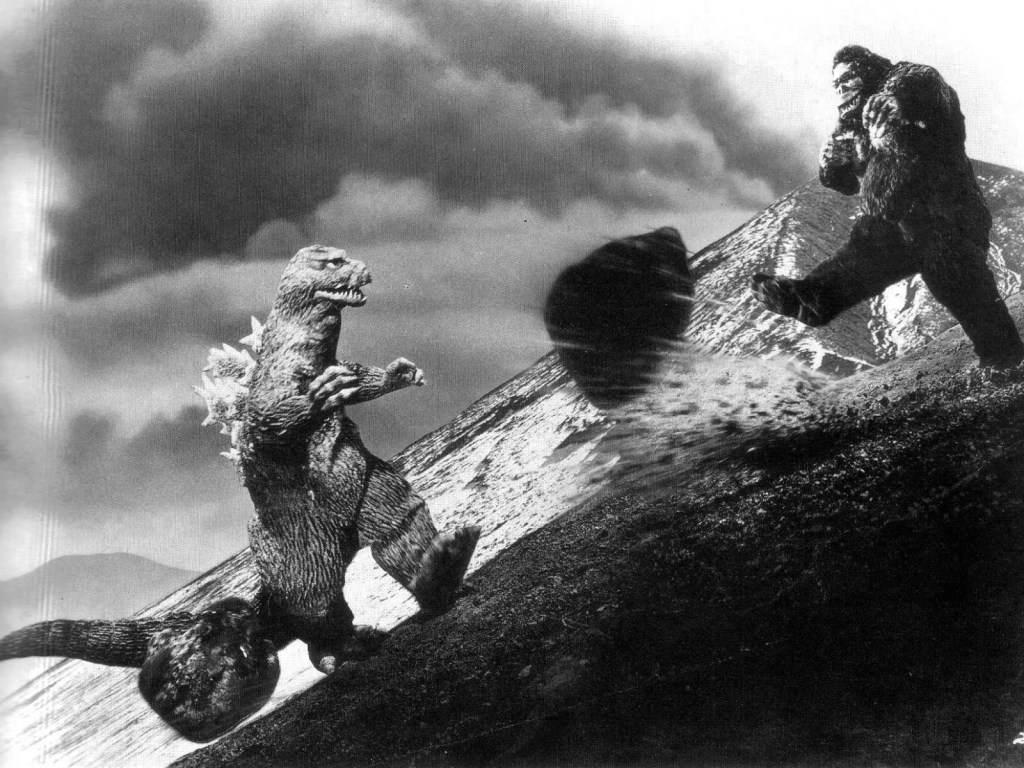
He kicked a rock!

I’m particularly excited for this movie because of the internet criticism I mentioned before. In the last 15 years or so, internet criticism has grown off of looking for plot holes, logic gaps, etc. “The Death Star shouldn’t be blown up that easily.” “They should have had the eagles fly them to Mordor instead of walking.” “Indy shouldn’t have been able to ride on that submarine.”

It’s been a strange cultural development for the movies. Back in the olden days, you saw a movie in the theater and maybe on a TV rerun. If you enjoyed it, you enjoyed it. If you didn’t, you’d forget about it. Technology radically transformed our relationship to the movies as they became more readily available. With VHS, we could watch them over and over, which is how millions of kids found goofs and contrivances in the Star Wars movies. Things you’d forget when you’re being washed over by the emotion of the film in the theater.

When DVDs came along, you could criticize everything frame by frame. Every aspect of a film could be analyzed to a precise level. Now, with the advent of social media and Youtube, you’re pressured to have hot takes about the movies to get all the likes and retweets. The algorithms like it when your takes are hot. It likes it even better when two people have polar opposite opinions about a movie, because that conflict can further drive engagement. This strict scrutiny is so polarizing and so addictive that there were reports that Russian troll farms were trying to rile up internet arguments about The Last Jedi to stir domestic unrest in the United States.

In my opinion, this has been a bad development. The strict logical analysis keeps people from enjoying movies and it inhibits creators from making the right decisions for their stories.

When waiting in line to see a movie at South by Southwest, one girl told me that she couldn’t enjoy Black Panther because she took a film class where the professor taught her how to dissect a movie logically. She couldn’t see past “logic faults” in one of the most exciting movies to come out in years. This phenomena has made its way all the way up to directors and show runners. The Russo Brothers went out of their way to ensure that Captain America: The Winter Soldier was “Honest Trailers proof.” Jonathan Nolan changed the entire second season of Westworld because some people on reddit guessed the plot twists in advance. I enjoy talking about movies with people, but this obsession with logic and puzzles has eroded the main mechanism we have with the movies. Emotion.

Movies are designed to make an emotional impact on their audiences. Their entire mechanism is a magic show, where the filmmakers present an illusion of movement, of time and space, and of characters. The reason three act structure is centered around conflict, climax and resolution is because it’s supposed to bring us on an emotional journey along with the characters. We’re not supposed to solve movies, no matter how much that activity makes us feel secure in our own mental faculties. We’re supposed to feel them.

Christopher McQuarrie, the Oscar winning filmmaker behind the latest Mission Impossible movies once said that the biggest thing he’s learned in his decades of writing movies is that they’re about emotion, not information. Filmmakers are not supposed to twist themselves in knots trying to make a movie make perfect logical sense, they’re supposed to make us laugh, cry, and be thrilled.

Hopefully Godzilla vs. Kong will snap a big chunk of us out of our obsession with logic and plot holes. We’ve spent almost a year now locked in our homes, not going to the theater. Fewer movies have come out, and I for one and pent up, itching to see a movie in the theater once I’m vaccinated.

Godzilla vs. Kong is a big dumb movie designed to make us feel excited about monsters punching each other amongst neon lit skylines, and people screaming and rooting for Godzilla and/or King Kong to beat up the other. Movie stars are gonna talk about how big Kong is and run away from Godzilla’s laser. I think that after a year not seeing movies, people complaining on the internet about how big monsters fighting doesn’t make any sense is gonna seem pretty dumb. Because it was always kinda dumb. Logic in art can only get you so far. In the movies, emotion is king.
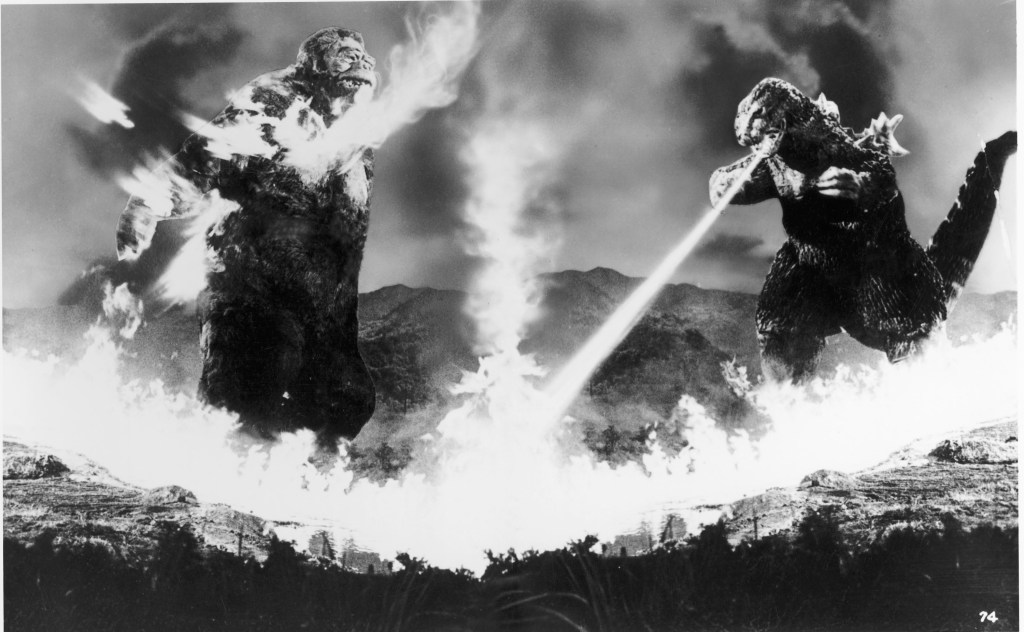
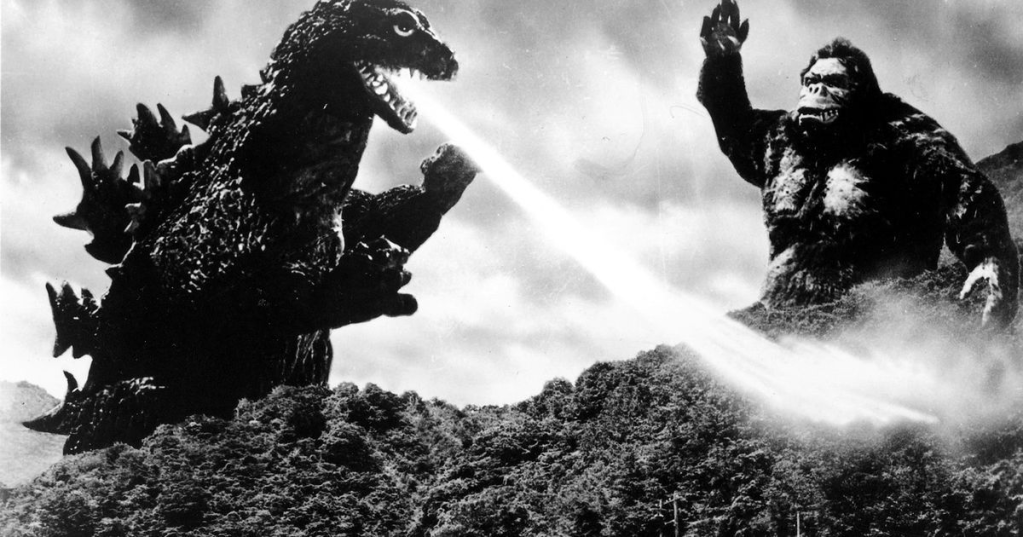
Fire!!

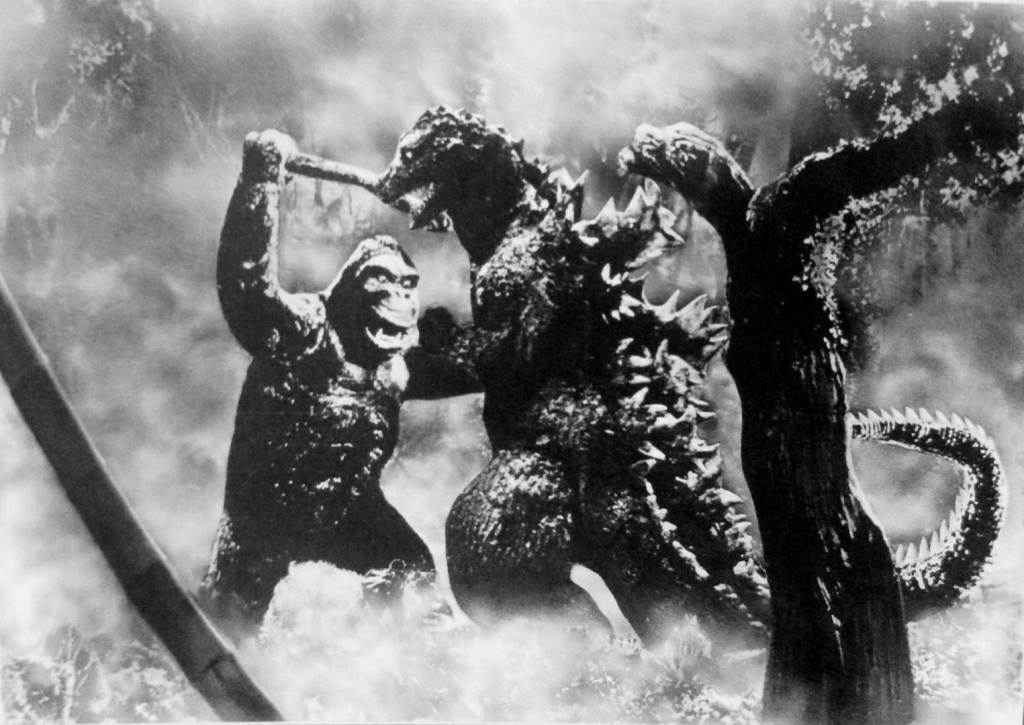
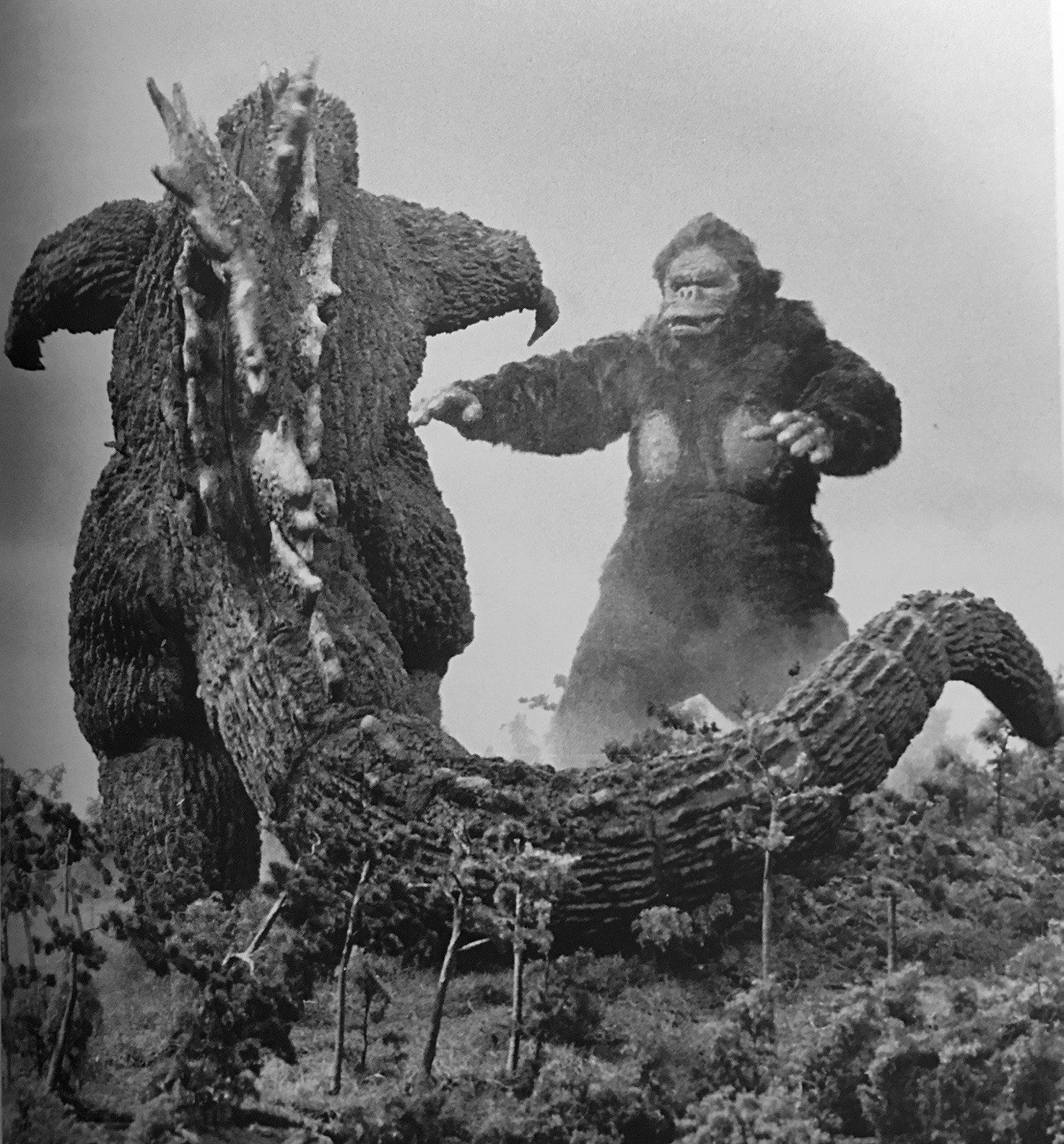
(Here’s some more dumb photos from 1963’s King Kong vs. Godzilla cuz they’re great.)
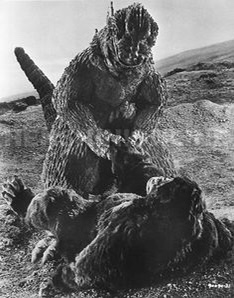
Oh no! He’s got him pinned down!
Look out for the laser!
Don’t smash the house!
King Kong’s got a tree!

Peanuts, Apple Tv+, and the Balkanization of shared culture.

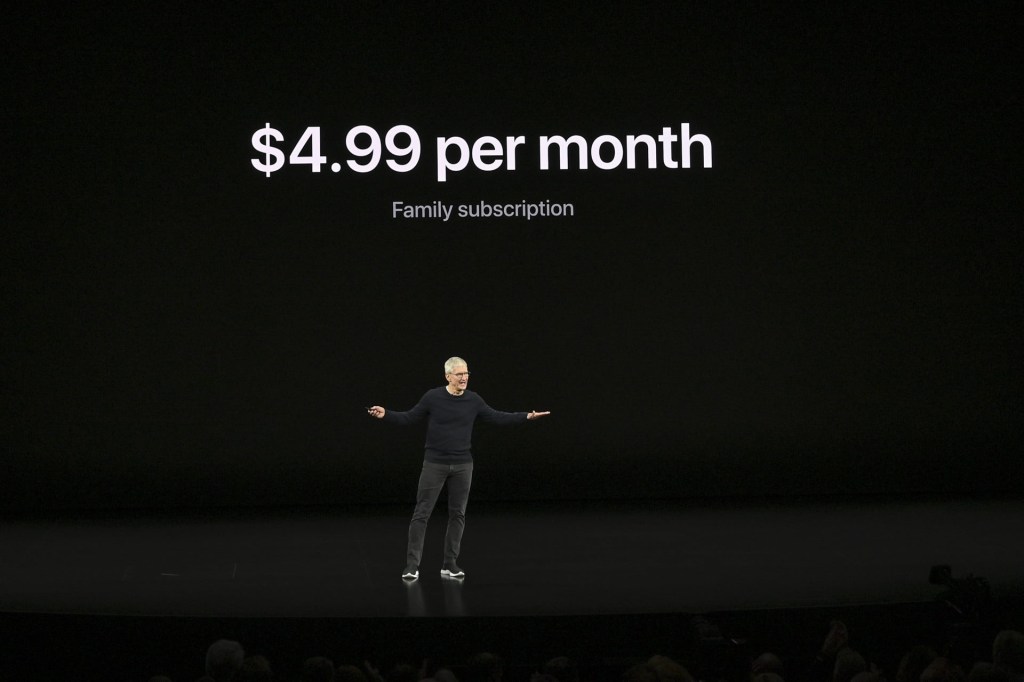
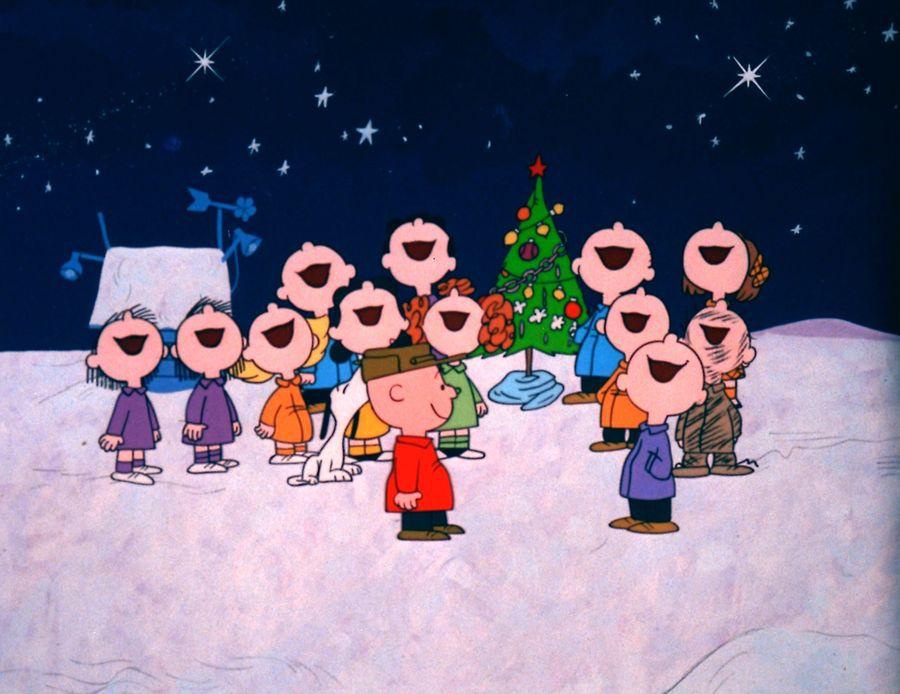
Apple bought the rights to distribute Peanuts cartoons in 2018. The plan was to create several series of new shorts in the coming years (including Mother’s Day, Earth Day, New Years Eve and others), as well as stream them exclusively on Apple’s streaming service, Apple TV+. They managed to stream It’s the Great Pumpkin Charlie Brown on apple devices exclusively, ending the special’s 54 year run on broadcast TV. After backlash from fans of the specials, Apple worked out a deal with PBS to broadcast the special A Charlie Brown Christmas on air, and stream on the PBS Kids website on December 13th. People who subscribe to Apple TV+ for $4.99 a month, or those who buy Apple devices, (I know, it’s really confusing. I don’t know how I have the service) will still be able watch the special whenever they want.

I think this is a microcosm of the ways the film industry is evolving, and how these business decisions threaten to impact our shared culture. The stories we all share no matter out political beliefs or our geographic locations. What Apple tried to do shows the power of the trends in the industry, and the backlash and Apple’s backtracking shows the power that shared culture still retains.

Back in the 1950’s, there were only three Television stations, and newspapers where everywhere. Big cities and small towns alike had newspapers printed daily or weekly, and millions of people would listen to the nightly news on either ABC, NBC, or CBS. It’s in this environment where Peanuts thrived. Charles M. Schulz began writing his Peanuts characters in October of 1950, and they were sent out to seven newspapers. This structure was called syndication, where one entity would own what was produced, and would sell it to various other newspapers to use. That’s how the Peanuts eventually spread across America, to newspapers that adults would read, and often give to their children to read on the side.

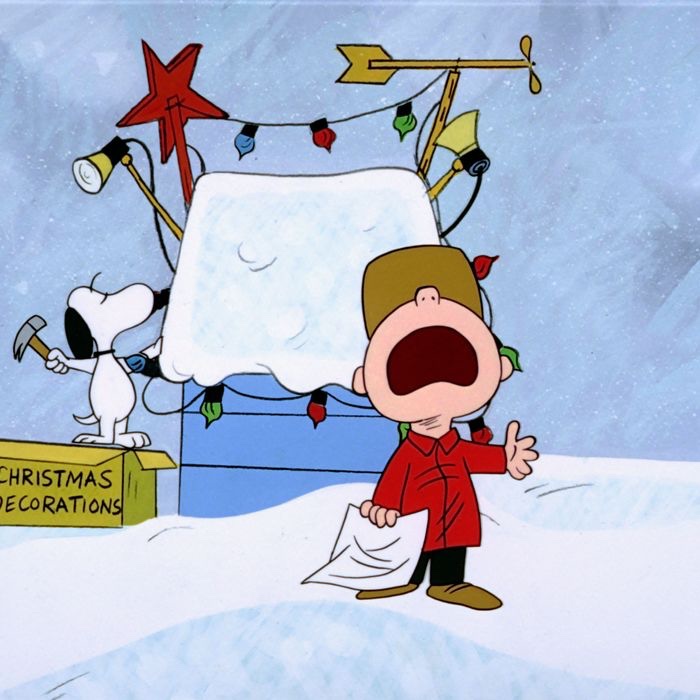
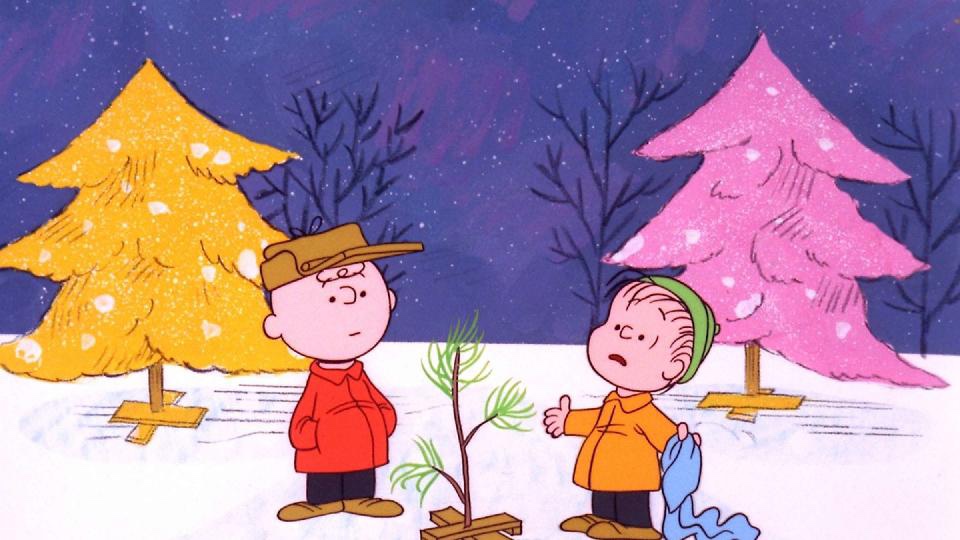
In 1965, the same thing happened with A Charlie Brown Christmas. We all read the same comic strip, and watched the same special. We all learned about the dangers of Ego and commercialism, and the values on prudence and Jesus Christ. A Charlie Brown Christmas had such a large impact on American culture, that the thriving aluminum Christmas Tree industry soon collapsed. Americans saw the value in Charlie Brown’s puny tree, and changed their values accordingly. When a story is powerful, and we all have the ability to partake in its telling, it can change culture.

In 2011, Ted Sarandos, the Chief content officer for Netflix, bought the rights to House of Cards for $100,000,000 dollars. Before then they were a dvd delivery service, and a streaming service for other studios and network’s shows. It was a risky bet, but Netflix convinced the creators of the show to go for them instead of premier Cable networks like HBO and AMC for a guarantee of two complete seasons, and a giant paycheck. Netflix was able to risk that because in return, they’d get exclusivity. You had to go to Netflix to watch House of Cards. This was the beginning of a major shift in the way Hollywood would distribute content. Eventually, Netflix would become the giant it is today, and rivals would scramble to catch up.

Disney would try and pull people in with their extensive catalogue of animated classics, and their acquisition of major brands such as Marvel Studios and Lucasfilm. NBC-Comcast-Universal would try to lure people in with free streaming. HBOMax would try and get people in with their prestige cable programing, their century’s worth of films in their back catalogue, and now, exclusive streaming rights to their 2021 theatrical slate on the same day those films were supposed to go to theaters.

This left Apple, who has a vast, integrated network of beloved hardware and software to try and make their own mark. They’ve tried to work with talent, including Oprah, Loren Bouchard and Nora Smith, Steven Spielberg, Sophia Coppola, and soon, Martin Scorsese. They’ve tried to leverage their trillion dollar surplus to give people the cheap subscription price of $4.99 a month. They’ve tried to produce original, high concept content that isn’t based on any previous intellectual property. None of that has worked so far. But like everyone else, they’ve also tried to be the exclusive distributor of beloved stories, characters, and iconography.

I haven’t seen any of the new Peanuts show’s Apple is producing yet. I’m sure there’s lots of talented people trying to bring Schulz’s characters to life in a faithful and creative way. I don’t think there’s anything inherently wrong with a company producing new content exclusively on their own platform. (At least for a while.) What I, and many others find troubling is how in the search for a wider subscription base, Apple and other companies are trying to make characters that our entire society has grown up with exclusive. Apple products are expensive, and the way that they’re distributing Apple TV+ to other platforms is confusing. All of this means that there’s a risk that one day, Peanuts won’t be airing on every TV, printed in every newspaper for us to enjoy and learn from together.

The Newspaper has been slowly collapsing for years. National juggernauts like the New York Times and the Washington Post are doing just fine, but local, small town papers have been shutting down for years. This is in large part because of the rise of the internet, where at first we went to the websites we trusted for news, and now social media algorithms curate our feeds to give us information that will prompt us to engage with their site the most. This phenomena is called CyberBalkinization, and it means that we read things that are to our own taste more and more, and watch things together less and less. My feed is different from yours, and the shows I watch are different than yours, in part, because we pay for different streaming services.

In some ways, this cultural shift has lead to lots more stories being told, and new voices telling their stories who haven’t been heard before. All those things are good, but there’s something lost when we can’t all reference the same story.

I’m glad that Apple made a deal with PBS to broadcast A Charlie Brown Christmas, at least for one night. And I’m very glad that the special is still available to purchase on DVD and Blu Ray. While the nature of profit in the entertainment and news industry is changing, and we have to deal with those realities instead of wishing we can return to a bygone era, I hope we can still put value onto stories we watch together.

There’s a power in shared culture, it teaches us, it makes us laugh and cry, and it changes the way we speak and think. Together. Not in our individual bubbles. Let’s try and keep it going.

Review: The Adventures of Tintin

There are lots of ways in which European culture is more sophisticated than American culture. One of them is that our brethren across the Atlantic figured out that Tintin rules ages ago, and we still haven’t.

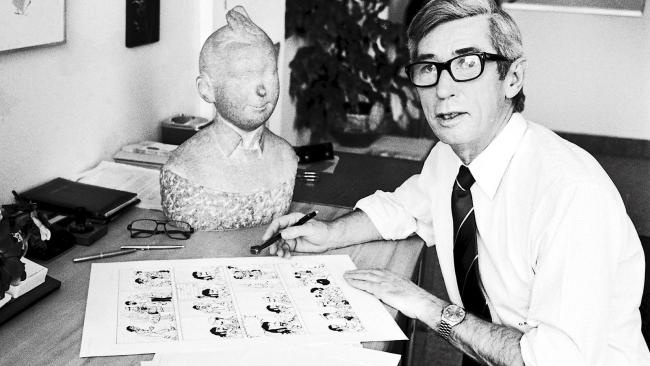
Tintin is a reporter, an adventurer, a boy scout, about 15, and an all around class act. He’s followed stories across the globe since his debut in the Belgian newspaper Le Petit Vingtième in 1928. Created by cartoonist Hergé, Tintin helped the artist develop his drawing and storytelling skills in weekly installments. Tintin soon became a hit across the French speaking world, and eventually the entire globe. But Tintin never took root in the United States aside from niche comic corners, (of which I am now a part) and we blew our chance to appreciate the film The Adventures of Tintin.

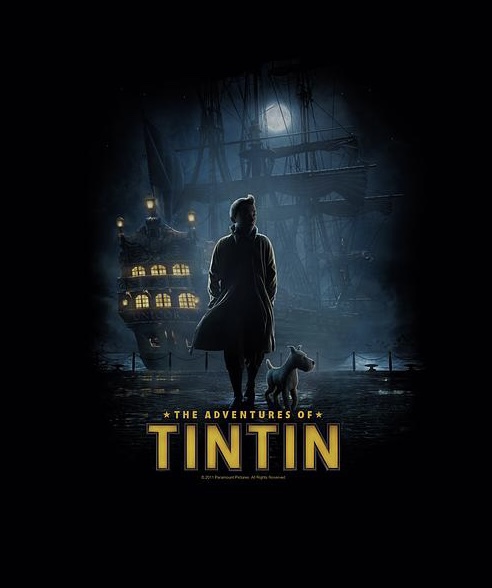
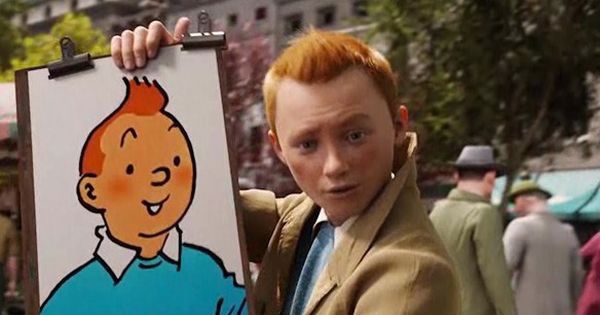
The Adventures of Tintin is a 2011 film directed by Steven Spielberg, and it doesn’t get talked about enough. It not only is representative of Spielberg’s skills as a filmmaker, it is filled with joyful performances, breathtaking visual effects, a brilliant script that pulls off an impossible act of adaptation that is still able to capture the joyous nature of Hergé’s original work. In my opinion it is the best Motion Capture movie ever filmed.

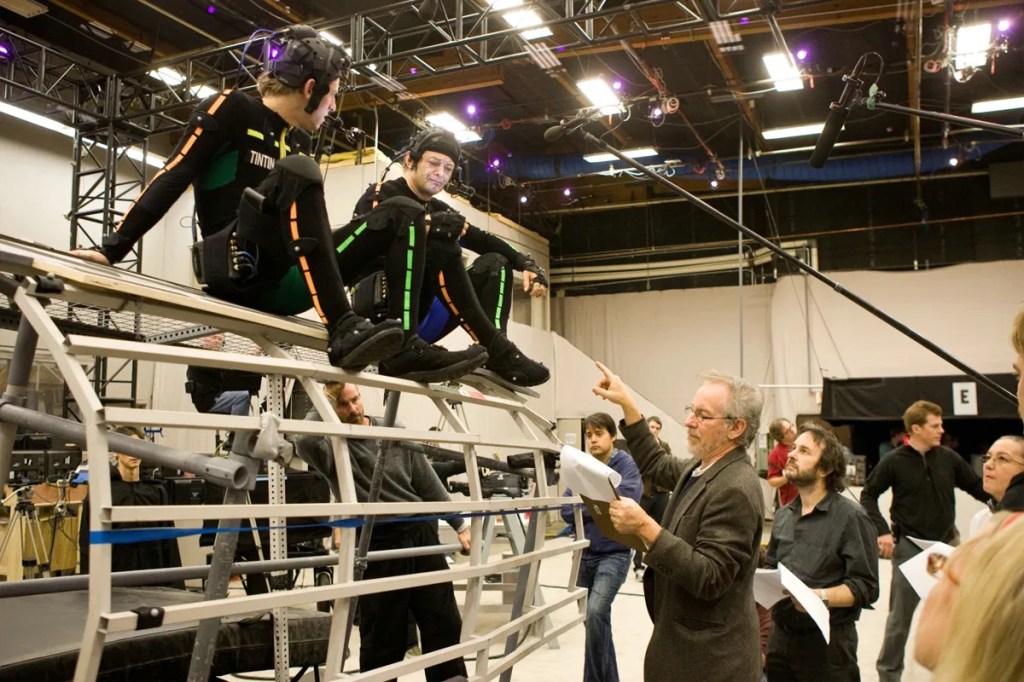
From the top left, down to the right, Jamie Bell, Andy Serkis, Steven Spielberg, and Peter Jackson.

The film follows Tintin, (Jamie Bell) a boy reporter as he discovers that a model ship he has built, The Unicorn, is worth more than he bargained for. It is sought after not only by the CIA, but by Sakharine, (Daniel Craig) an evil baron who wants to collect three ships of the same model. Tintin investigates with his dog Snowy by his side, and discovers that the model ships will lead to an ancient treasure that’s been lost for 300 years. It’s a race to find the treasure, and Tintin must avoid a pickpocket, (Toby Jones) pirates, and many more dangers. He must befriend two identical police officers named Thompson (Simon Pegg) and Thomson (Nick Frost) as well as Captain Haddock (Andy Serkis) who would be the best sea captain in the world if he wasn’t a miserable drunk. In order to find the treasure they travel across Europe and North Africa, evading capture and swashbuckling the entire way through.

It’s hard to describe how well the story captures the essence of the comics, but it manages to transform a weekly comic strip, (which by its nature is fast paced, action driven and was largely written week to week) into a functional screenplay. It combines plot lines from three comics and blends them seamlessly into one feature length structure, while paying homage to the entire series. (Including Hergé himself.)

Despite its quality, the film was mostly forgotten after its initial release. Perhaps Spielberg’s other film, War Horse which released a month later hurt it at the box office. Perhaps American’s lack of familiarity with the comics kept us from appreciating the films passion for and dedication to the source material. Either way, this is a film that should be appreciated, it is a fine representation of Spielberg working at the top of his game, it has a superb script, and it is tons of fun for all ages. It may be the best Motion Capture movie ever made, it was made with the same skill and craft that the original author put into his own work.

If you’ve forgotten it, or have never seen it before, I highly recommend checking it out. It’s currently streaming on Amazon Prime. You won’t be disappointed.

Why streaming is bad, and theaters are good.

Streaming has arrived. Last week, Warner Media announced that all of their 2021 theatrical slate will be released simultaneously on HBO Max and in theaters. A puzzling move that is likely equal parts financial caution, a move to get movies to people in uncertain times during a pandemic, and a desperate attempt to give HBO Max a shot in the arm. Cinefiles and film critics panicked, while many rejoiced that they’d be able to see new movies from their couch as quickly as possible.

While I recognize the drawbacks of theatrical releases; the costs, the trip it takes to get out there, and the benefits of streaming, I think that this is a bad development. There are people who know more about the financial ramifications of streaming releases, particularly on the sustainability of blockbusters financially, but I want to talk about what I’ve observed in the culture of streaming. Things I’ve picked up on in conversations and articles, but also in my own experience in watching movies on streaming. How the medium of streaming forms the message of the movies.

I was educated on streaming. When I really got into films in high school, I dove into movies on Neflix, and later Hulu, Kanopy, HBO and now Criterion. Streaming is fantastic for watching old movies. It allows you to select older films that are difficult to come by and watch them on your own schedule. It’s also fantastic for TV, where the nature of the shorter format allows for flexibility that broadcast schedules don’t allow. There are drawbacks to our collective consumption of Television, we’ll likely never watch a show like “MASH” together again, but overall TV has benefited from streaming distribution. Just look at the successes of “Breaking Bad” and “The Office”, which have had second and third lives on Netflix.

This benefit is not seen in streaming movies however. In the traditional theatrical format, movies need to be heavily marketed to build hype and get butts in theaters. This marketing campaign gets lots of people interested in the movies, and it builds up events for people to all go see the movie on opening weekend, or otherwise see it a few weeks later. With streaming, the nature of the event is fundamentally different. If there is a buildup, it’s a light ad campaign with perhaps some critical buzz. But most companies expect viewers to be guided to their films via algorithm.

The upcoming “We Can Be Heroes” is a sequel to “Sharkboy and Lavagirl,” movie that should be nostalgic for young mellineals who grew up on the director’s early works like Spy Kids and the original film. It’s a nostalgia sequel by an influential director that has a major star in Pedro Pascal. But Netflix only announced the film several weeks before the film is set to stream there. Maybe millions of people will watch “We Can Be Heroes,” but people aren’t talking about it because the most Netflix is doing to promote it is tweeting out a poster and a 45 second preview. No need to try and make it a hit, because the algorithms will send it to those who want to see it. Probably.

Aside from the diminished hype the streaming model brings, (which for now is mostly relegated to the giant Netflix and its pre-streaming war cohorts Hulu and Amazon) the streaming experience is inferior to the theatrical experience in numerous ways. Aside from gripes about phones and the substandard experience of viewing movies on crumby TVs, the nature of sitting own on your couch, browsing for minutes upon minutes trying to decide what movie to watch, and then pausing whenever, you feel like it or whenever you get bored detaches the viewer from the time and place they see the movie. When you build hype for a movie, when you’ve got to see it, when you schedule a time and place to see it with your loved ones, when you go across town to wait in line to see it, you are placing yourself in a certain place and time. You’re forming a memory in that event, instead of scrolling across the screen.

One of my first memories is seeing Ron Howard’s “How the Grinch Stole Christmas.” I remember the movie of course, but I mostly remember exiting the theater on a cold November night. I remember looking back from the parking lot at a giant poster of the Grinch, and seeing snow fall down. I’m pretty sure I was in Orlando at the time, so it probably didn’t snow that night, but the act of going out to the theater, coming home from it, and the reality of the movie invading my own reality has stuck with me to this day. I don’t think I’d have the same reaction as a kid if I had watched it merely on TV.

I enjoy subscribing to HBO Max. It offers a wide variety of movies and TV shows that I can enjoy and educate myself with. But I don’t think WarnerMedia’s decision to release all their 2021 movies simultaneously on streaming and in theaters is good for those movies, or for the audience’s experience of them. I hope audiences realize that in non-pandemic times, theaters are the way to go, and that an abundance of convenience isn’t necessarily the best thing for our experience. After all, all we’re left with after we watch a movie is our memories of it. We should try to make those memories as impactful as possible.

Design a site like this with WordPress.com
Get started