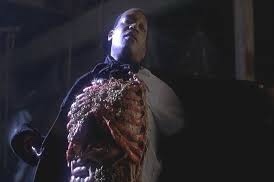
Featured

The Wisdom and Youthfulness of M. Night

M. Night Shyamalan is young at heart and wise beyond his years. That’s the take away I keep coming back to after seeing his new film Old for the second time in theaters.

I came to film slowly, but with increasing intensity. A major part of that was when I visited my cousins who lived in suburban Pennsylvania. I watched Toy Story 2, The Matrix, James Cameron’s Avatar and the Star Wars Prequels in on DVD in their basements between moving cities and countries. I remember one summer they wanted to show me a local hero of theirs; M Night Shyamalan.

That was around 2005-2007. My cousins were obsessed with arguably his three best movies, The Sixth Sense, Unbreakable, and Signs, undoubtedly because my uncle worked in Philly, and Signs was filmed in their Bucks County. They had made sure not to show me his more recent works, and had yet to see his much maligned adaptation of their beloved Last Airbender.

Shyamalan had just gotten off a rollercoaster. He had gone from making a few little known films, to selling The Sixth Sense on spec for a reported 3 million dollars. The Sixth Sense was a phenomenon, and three years later, a famous Newsweek cover declared him the next Spielberg.
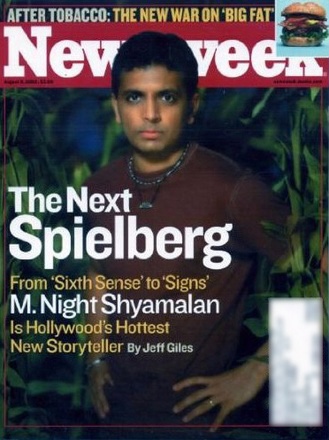
M. Night under too much pressure.

Shyamalan soon crashed. His name became a punchline almost as quickly as it became synonymous with storytelling. Amongst many, his name is still a joke. But M. Night kept working.

Starting with 2015’s The Visit, Shyamalan began working on smaller projects by self financing his movies. The Visit and Split were both made for under $10 million, and Glass was made for less than $20 million. All were big hits, with The Visit making $98 million worldwide, and Split and Glass making over $200 million worldwide. Self financing allowed Shyamalan to have smaller budgets, let him take bigger creative risks. He has said that those risks gave him the personal pressure to be creative again, to go back to that feeling when he was in his 20’s, trying to sell The Sixth Sense to studios.

Observing from the outside, Old seems to be a culmination of those experiences. His latest film oozes with confidence that he can make a more ambitious film and have it pay off. That confidence is something that doesn’t break into the mainstream enough. It’s something reserved for filmmakers who are confident in their craft, and who have something to say.

Spoilers below…

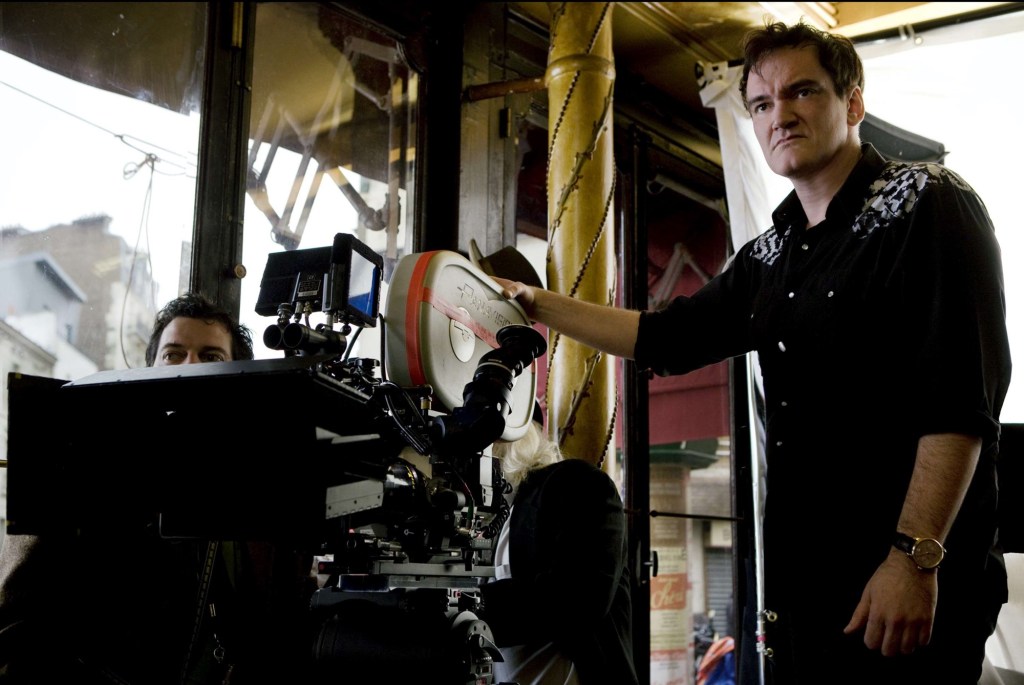
M. Night on set in the Dominican Republic.

Old has an all star cast led by Vicky Krieps andGael Garcia Bernal. They play the parents of a family going on a tropical vacation. From the first moments of the film, Shyamalan is introducing the audience to the characters in the simplest way. We get the dynamic of the family instantly and soon learn of their trip to this remote resort. They go to the beach and the daughter Maddox (played by Alexa Swinton and later Thomasin McKenzie) instantly looks at a group of teenagers playing volleyball. Without words, Shyamalan has introduced the irony that this character wants to be older.

Old is filled with visual storytelling like this. He uses the camera and the grammar of cinema to communicate visual story ideas. The frame cuts off the heads and feat of the characters to indicate the characters’ disorientation and claustrophobia when they’re on the old beach. Well timed cuts to the pounding waves show how the characters can’t escape the beach, and imply the harsh impact of death. Minnows pick at the son Trent’s (Played by Nolan River, Luca Faustino Rodrigues and Alex Wolff) feet as he’s in the resort beach, disappear when he’s at the lifeless old beach, and reappear when he and Maddox finally escape. When the parents finally die of old age, the camera swings back and forth up the shore, implying the inevitability and serenity of death.

This is sophisticated visual storytelling, worthy of Shyamalan’s well known inspirations Spielberg and Hitchcock. In these moments it’s more concerned with communicating these complex ideas in the most sophisticated way possible. It’s an art house film. But it isn’t merely that. It is also a schlocky American horror movie, reminiscent of B movies of the ‘50s like Invasion of the Body Snatchers, or The Creature From the Black Lagoon, of the expositional parts of Psycho, and of The Twilight Zone.

These works are concerned with exciting the audience with strange ideas that excite, and get to a wide audience. They have moments of visual creativity, but they also deal with heavy handed metaphors that cannot be called subtle.
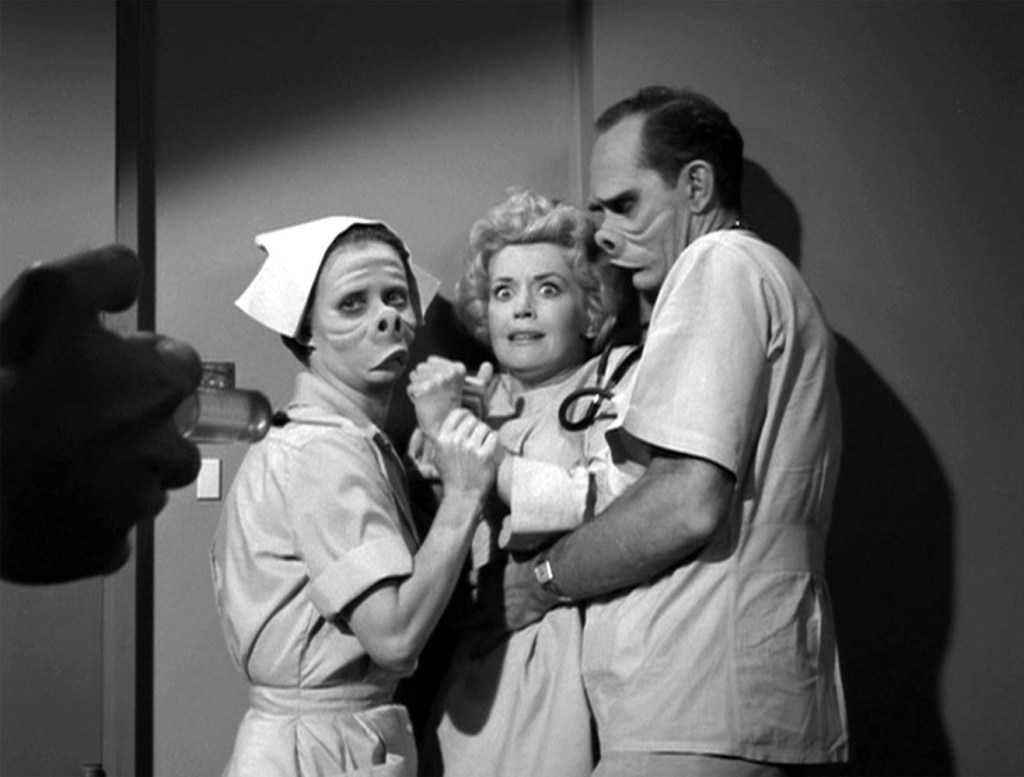
The Twilight zone seen not being subtle.

Old is not subtle. It’s about all of these people living their entire lives on the beach. Their entire lives. It crams all of the emotions and plot points, into a day. Those of death, loss, hatred, disease, divorce. Those of love, birth and forgiveness. Shyamalan uses big performances and stilted dialogue to communicate these plot points and these emotions in under two hours. It’s clunky, it’s unsubtle, it’s not completely logical.

Characters espouse exposition constantly to move the plot along. That has turned many, many audience members and critics off. Yet for me, it speaks to both the schlocky horror films that Shyamalan draws inspiration from, and the inherent discombobulation of seeing all of life pass before your eyes in such a short period of time.

This also comes into play with the twist ending of Old. He could have been ambiguous with his ending, keeping the nature of the again process unsaid and leaving us with the unsettling nature of our own mortality. But he’s also giving us that Twilight Zone explanation. The hotel is run by a drug company that’s using the beach to test drugs in a day instead of in a lifetime. This wraps up things neatly, but it also follows the logical extension of the premise. If there was a beach that made you old, giant corporations would probably try to exploit it for profit.

Shyamalan is pulling from both of these traditions simultaneously. He’s using his premise of a beach that makes you old to meditate on family, aging, and the fragility of our bodies using visual metaphors. He’s also pulling from genre tradition that explains things to a wide audience. Both nationally and internationally. Simple and a simple premise dialogue allows him to reach a large audience. Complex visual storytelling allows him to to go deep with that premise.
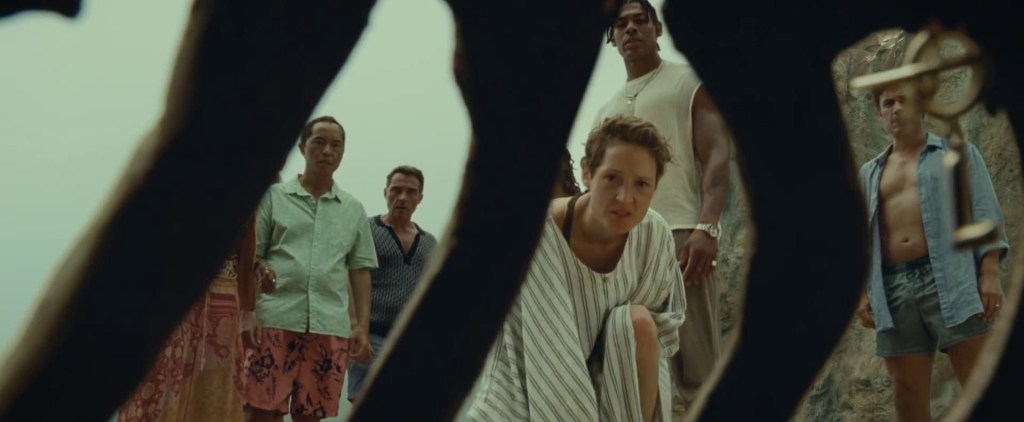
The families discover that the beach makes you old.

I think a lot of critics of Old are missing the tension that he’s playing with here. Old is stilted. It’s unsubtle. It’s inelegant in lots of places. But that doesn’t take away the simplicity of the premise. The premise that you live a lifetime in a day has so much juice that he’s able to play with it endlessly. It’s youthful. He’s having fun with the body horror of the premise, and he’s taking risks that no grizzled studio veteran would allow him to do.

Yet at the same time he’s injected lots of wisdom into the film. Bernal and Krieps argue in the beginning of the film, and are about to get divorced, but by the end they learn to forgive each other. The family that learned to survive was the one that stuck together and forgave each other.

The wisdom is also shown in Shyamalan’s filmmaking process. After a tumultuous decade, he’s learned his limits. He speaks of his inability to handle big budget films, and that he’s at his best when he’s working with small budgets. He’s created an environment where he can work with collaborators who trust in him. (Including his daughters.) Where he can experiment with smaller projects with bigger ambitions, rather than with the blank checks a Spielberg or a Cameron gets.

All of this is shown in one of the final scenes in Old. When Trent and and Maddox have spent an entire day on the beach, now in their 50’s they decide that they shouldn’t give up on escaping the beach. They should try and get off the beach, but they should build a sandcastle first. They’ve learned that you must enjoy live in the limited time you have. To use the wisdom of your life experiences while still being able to look at things fro a child’s eyes.

M. Night directing Old.

Old is many things at once. It’s clunky and elegant. It’s subtle and in your face. It’s simple and complex. Not everyone will like it. That’s because it’s an M. Night Shyamalan film through and through. It’s incredibly personal. It feels wrong for Shyamalan not to swing for the fences. He’s kept in touch with what made him connect with me and my cousins in a basement Bucks County. I love him for that. And I love Old for that. People should go check it out.

Old is in theaters now.
Featured

Why streaming is bad, and theaters are good.

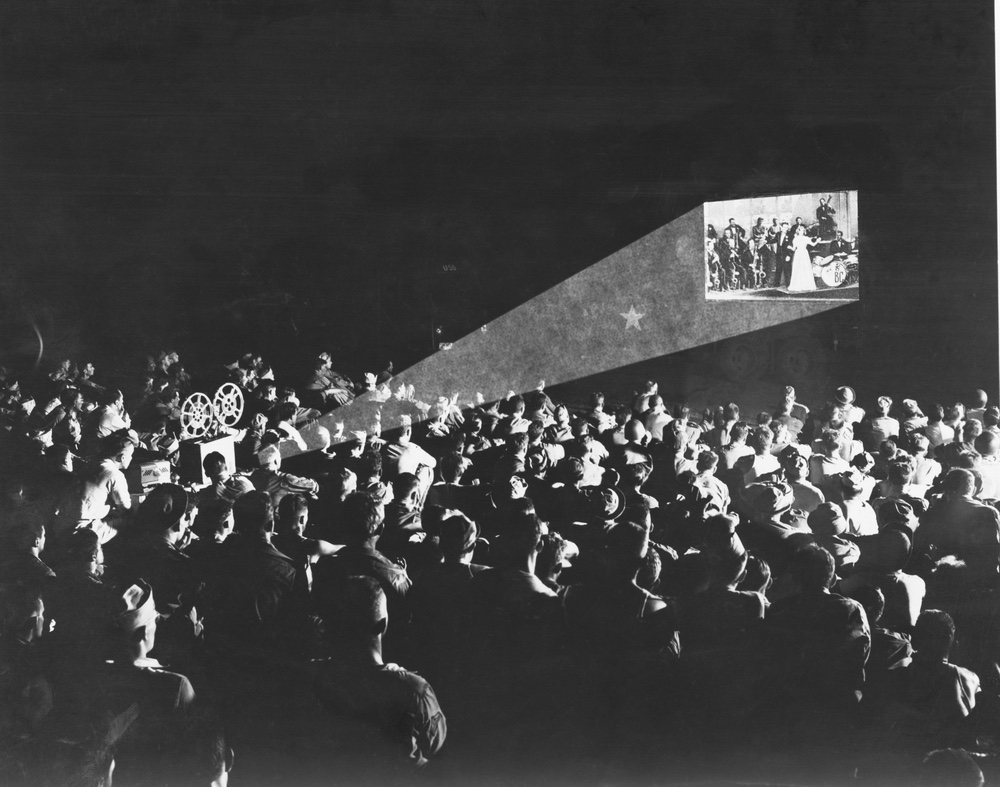
Streaming has arrived. Last week, Warner Media announced that all of their 2021 theatrical slate will be released simultaneously on HBO Max and in theaters. A puzzling move that is likely equal parts financial caution, a move to get movies to people in uncertain times during a pandemic, and a desperate attempt to give HBO Max a shot in the arm. Cinefiles and film critics panicked, while many rejoiced that they’d be able to see new movies from their couch as quickly as possible.

While I recognize the drawbacks of theatrical releases; the costs, the trip it takes to get out there, and the benefits of streaming, I think that this is a bad development. There are people who know more about the financial ramifications of streaming releases, particularly on the sustainability of blockbusters financially, but I want to talk about what I’ve observed in the culture of streaming. Things I’ve picked up on in conversations and articles, but also in my own experience in watching movies on streaming. How the medium of streaming forms the message of the movies.

I was educated on streaming. When I really got into films in high school, I dove into movies on Neflix, and later Hulu, Kanopy, HBO and now Criterion. Streaming is fantastic for watching old movies. It allows you to select older films that are difficult to come by and watch them on your own schedule. It’s also fantastic for TV, where the nature of the shorter format allows for flexibility that broadcast schedules don’t allow. There are drawbacks to our collective consumption of Television, we’ll likely never watch a show like “MASH” together again, but overall TV has benefited from streaming distribution. Just look at the successes of “Breaking Bad” and “The Office”, which have had second and third lives on Netflix.

This benefit is not seen in streaming movies however. In the traditional theatrical format, movies need to be heavily marketed to build hype and get butts in theaters. This marketing campaign gets lots of people interested in the movies, and it builds up events for people to all go see the movie on opening weekend, or otherwise see it a few weeks later. With streaming, the nature of the event is fundamentally different. If there is a buildup, it’s a light ad campaign with perhaps some critical buzz. But most companies expect viewers to be guided to their films via algorithm.

The upcoming “We Can Be Heroes” is a sequel to “Sharkboy and Lavagirl,” movie that should be nostalgic for young mellineals who grew up on the director’s early works like Spy Kids and the original film. It’s a nostalgia sequel by an influential director that has a major star in Pedro Pascal. But Netflix only announced the film several weeks before the film is set to stream there. Maybe millions of people will watch “We Can Be Heroes,” but people aren’t talking about it because the most Netflix is doing to promote it is tweeting out a poster and a 45 second preview. No need to try and make it a hit, because the algorithms will send it to those who want to see it. Probably.
Aside from the diminished hype the streaming model brings, (which for now is mostly relegated to the giant Netflix and its pre-streaming war cohorts Hulu and Amazon) the streaming experience is inferior to the theatrical experience in numerous ways. Aside from gripes about phones and the substandard experience of viewing movies on crumby TVs, the nature of sitting own on your couch, browsing for minutes upon minutes trying to decide what movie to watch, and then pausing whenever, you feel like it or whenever you get bored detaches the viewer from the time and place they see the movie. When you build hype for a movie, when you’ve got to see it, when you schedule a time and place to see it with your loved ones, when you go across town to wait in line to see it, you are placing yourself in a certain place and time. You’re forming a memory in that event, instead of scrolling across the screen.

One of my first memories is seeing Ron Howard’s “How the Grinch Stole Christmas.” I remember the movie of course, but I mostly remember exiting the theater on a cold November night. I remember looking back from the parking lot at a giant poster of the Grinch, and seeing snow fall down. I’m pretty sure I was in Orlando at the time, so it probably didn’t snow that night, but the act of going out to the theater, coming home from it, and the reality of the movie invading my own reality has stuck with me to this day. I don’t think I’d have the same reaction as a kid if I had watched it merely on TV.

I enjoy subscribing to HBO Max. It offers a wide variety of movies and TV shows that I can enjoy and educate myself with. But I don’t think WarnerMedia’s decision to release all their 2021 movies simultaneously on streaming and in theaters is good for those movies, or for the audience’s experience of them. I hope audiences realize that in non-pandemic times, theaters are the way to go, and that an abundance of convenience isn’t necessarily the best thing for our experience. After all, all we’re left with after we watch a movie is our memories of it. We should try to make those memories as impactful as possible.

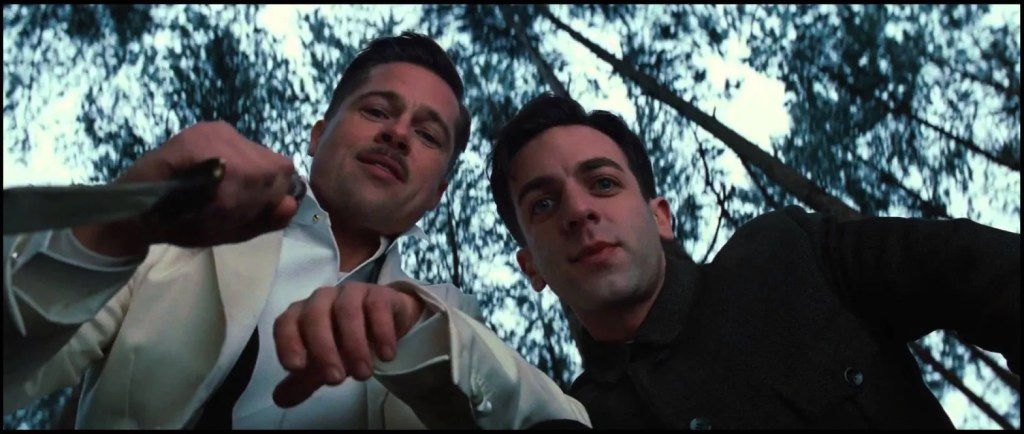
Two Basterds walk into a bar…

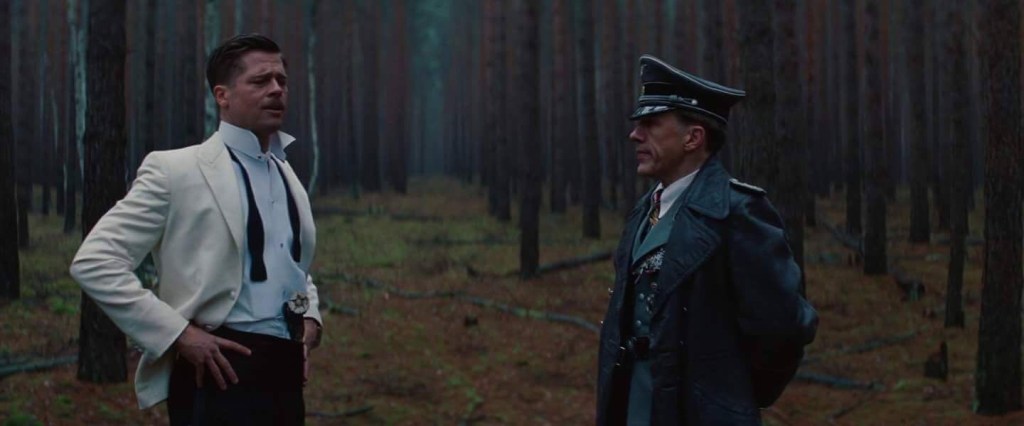
Two men emerge from the mountains to do a job. To defeat their nation’s enemies. One from the Alps, one from the Smokeys. They both enter a world where everyone must pretend to be something they’re not. Their culture, their language, their religion. Their ability to traverse different worlds equates one’s ability to survive.

One man is a chameleon. He can change on a dime and blend in anywhere. One man can’t change. One man emerges victorious.

I think that most people can acknowledge that Inglourious Basterds is one of Tarantino’s best works. It’s impeccably shot, acted, and the dialogue is as virtuosic as of Tarantino’s works. His dialogue is so impeccable that some have compared him to our modern Shakespeare, and Bastards has some of his best conversations, and best lines between characters.

However I think that many have dismissed Basterds as a mere cathartic exercise . A genre piece without thematic depth. I disagreed. There’s always been something floating in the air that I couldn’t quite figure out. Despite Tarantino claiming in interviews and in the final line of Basterds that it is his masterpiece, he doesn’t go out of his way to explain the themes or the subtext that are in his 6th (or 7th depending on how you count) film.

But I think it’s his masterpiece. And I think I’ve finally figured out the subtext that made Inglourious Basterds resonate with me for so many years. I think I can get into it.

Τhere are many a Tarantino quote and interview out there. They’re often about an opinion about another director’s career, or the state of the movie industry. But the quote that always stuck out to me was when he was in the Sundance lab, and he was told to go over the script for Reservoir Dogs, and find the subtext. He did a close reading of the script, and found that it was a father and son story between Mr. White and Mr. Orange. He did the task that Sundance assigned him, then said (to paraphrase) “Great. Now that I know the subtext is there, I never have to do that exercise again.”

I think that speaks to Tarantino’s philosophy as a writer. Unlike someone like Francis Ford Coppola, who tries to narrow down his themes to one word, and tries to make every scene about that one word theme, Tarantino players with situations. With genre conventions, with history, with personal experience. He’s not preoccupied with the audience understanding the intent behind the words. He’s satisfied to give us an entertaining ride, then let the themes sit in the back of our minds. Gnawing at us. You need to break down the events one by one to find the subtext.

Chapter One Once upon a time… in Nazi-occupied France

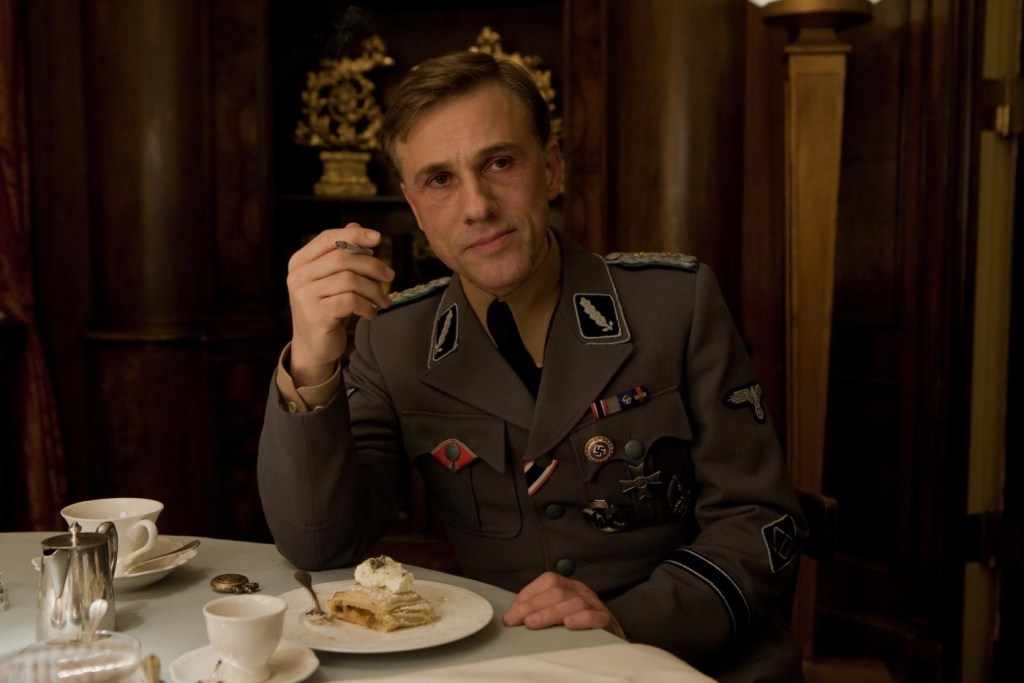
Hans Landa is a chameleon. He walks onto the LaPadite farm like he owns the place, asking for milk, asking the farmer’s daughters to leave the farmhouse. However unlike other German officers, who demand that everything they touch become more German, Landa appears to conform. He is fluent in French and Italian as well as English. Landa has the ability to twist and conform to enemy territory to get the job done.

Unlike the hammer of the Third Reich and its Blitzkreig, Landa is a scalpel. He is a cultured man from the Austrian alps. A cultured place that is in the center of Europe, where people speak German, French and Italian right next door.

In contrast to the rest of the S.S., Alda is a cosmopolitan prosecuting a fascist agenda. He appreciates French culture, cuisine and cigarettes. He admires the Jews. He wants to understand them in order to better kill them.

Chapter Two INGLOURIOUS BASTERDS

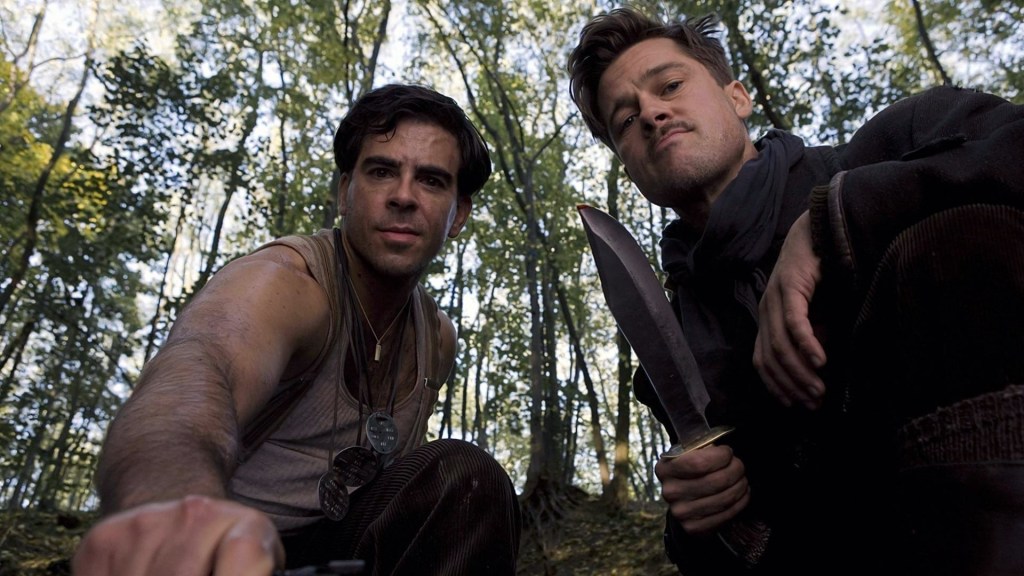
Lieutenant Aldo Raine is exactly what he seems. A Scotts-Irish mountain man from Maynardville Tennessee. He comes from a backwater that the country forgot about. For generations people from the smoky mountains lived isolated in poverty, working in the mines and the mountains and making liquor, to enjoy themselves and make a few extra bucks. He learned his running and gunning tactics from running moonshine, and from his Scottish ancestors before him.

In his introductory monologue, his accent is thick. He and the other Basterds are completely incapable of blending in. They know who they are, and they know their job. Killing nazis. Their outward appearances are conspicuous, and their mission is morally pure and resolute.

Chapter Three GERMAN NIGHT IN PARIS

Shoshana Dreyfus is always hiding who she is. When the Nazi Regime rolled into France, her family went into hiding. A year later, her family is murdered by Landa. She spends the rest of the war hiding in Paris, a Frenchwoman through and through, who must hide both her race and her religion.

Shoshana is as French as French can be. She smokes cigarettes, she flirts, she respects directors, she loves Marcel, her black coworker. She is everything great about cosmopolitan France. That makes her a target of every German who encounters her. It is an old stereotype of Eastern Europe that the military powers of the European plain feel culturally inferior to the bastion of France. At their worst, the Germans and the Russians have wanted to conquer Paris militarily to prove their superiority to the French people.

Enter Fredrick Zoller. A Nazi war hero who wants to win Shoshana’s affection by proving his own cosmopolitanism. He’s a film buff, he’s polite, he’s fluent in French when every other German Shoshana encounters is barking at her in their native tongue, wanting to appreciate her culture, to steal its art and its prestige, while enforcing their iron will over her.

Shoshana is forced to play their game when they ask to use her theater for Goebbels’ film premiere. She temporarily bends to their iron will. She blends in, hiding who she truly is. But she doesn’t reciprocate Zoller’s affection. Her mission, and her morals are pure.

Chapter Four OPERATION KINO

Lieutenant Archie Hicox appears to be as British as a Brit can be. When he enters the briefing room he is the epitome of stiff upper lip. General Ed French and Winston Churchill are in that room to defeat Hitler’s evil empire, and they see Hicox on an even level. Hicox has the moral purity and fortitude to get the job done. But they’ve selected him because they believe he can blend in with the Germans. They believe he’s a chameleon.

Hicox is a film critic. Someone who knows the ins and outs of the German film industry, and who will supposedly blend in perfectly in a German uniform. He is placed with three other spies for a rendezvous in Nadine, France, where they are to pick up movie star and spy, Bridget von Hammersmark.

Hammersmark is German through and through, but has a similar moral resolve to the rest of the Basterds, German born and American born alike. He plan is to meet in a tavern, go to the premiere of Zoller’s new film, and blow up the German high command. Aldo questions the plan, who prefers a direct fight to deception, but Hammersmark and Hicox believe they can be in and out.

When the Basterds meet a German squad, drunkenly celebrating in the tavern, one of the most captivating and tense sequences in Tarantino’s filmography ensues. It all hinges on Hicox’s ability to blend in as a German. He almost does it.

Chapter Five REVENGE OF THE GIANT FACE

When Hammersmark failed to get her Anglo-chameleon. To the premier she could’ve given up. She’s a wounded actress, and what remains of the Basterds are a bunch of dumb Americans with thick Appalachian and Boston accents. The task is impossible. But her moral purity and resolve pushes her to keep moving. The Basterds will find a way to do the impossible. Hoping that the Germans won’t have an ear for Italian accents.

When they arrive, not only are they unable to blend in, they are confronted with the chameleon Hans Landa. Who is able to sniff out any traitor to the Nazi Cause.

Landa kills Hammersmark, captures Rain, yet leaves Sergeant Donowitz and Private Ulmer to complete their task. Landa makes his bet. That he can negotiate his way to a deal where he can get away Scott free. That he can escape justice for his actions. For the Jews he murdered. For the crimes he committed on behalf of Goebbels propaganda machine, and Hitler’s genocidal campaign. He almost does it.

But Landa if facing Lieutenant Aldo Raine. A man who like Hammersmark, like Shoshana, recognizes that while the Nazis may be human, while they may be fathers and lovers and good soldiers, they must be punished for their crimes. By following orders, and becoming “foot soldiers to a Jew-hatin’, mass murderin’ maniac” they’re lost their humanity. And they need to be brought to justice. “They need to be destroyed.”

Landa and Zoller both think that their social positions can be negotiated, and forced through social connections. They think their ability to blend in puts them above their brutish counterparts. They think they’re operating on a level of mutual respect with their Allied counterparts.

But Aldo the Apache and Shoshana Dreyfus don’t operate on that level of mutual respect. They’re willing to die to do what’s right. To hell with niceties.

The exercise of reading the subtext of a film may not be necessary to making it. If the author is truly dead, it doesn’t matter what your thematic intentions are. The poetry and the meaning will be found in between the lines.

It takes a great amount of confidence to go forward and write the situation without focusing too much on the themes. But I think that Tarantino figured it out by trusting his gut, and writing what would be satisfying to an audience.

He could’ve come up with a convoluted reason for why the Basterds failed to kill Hitler, but that would not have been satisfying. He could’ve left the situation as it came about, with Landa escaping to Nantucket Island. But that would’ve left the audience un-satiated as well. The Nazis can’t just lose. We need to see them punished. We need to see the fear in their eyes.

I think Tarantino admires Hans Landa. He’s intelligent, cultured, well read, and wants to be good at his job. But intelligence does not make you a good person. Speaking multiple languages does not mean you share cosmopolitan values. One may think they can squirm out of any situation if they can negotiate, but that would be an immoral universe.

Tarantino gave the audience two counterparts to Hans Landa. A victim out for revenge, and a prosecutor. I think that in Inglourious Basterds he’s saying, intentionally or not, that it is good and right to pursue justice. That understanding those who are different from you is a virtuous trait, but valuing those who are different, and fighting for them, is a moral trait.

I think we need morals in a cruel world.

Even if it’s unnecessary to look for themes in the subtext. I think it’s a virtuous exercise.

Learning to Love Superman

It often feels as though one must be taught to appreciate pop culture. There are endless encyclopedias diving into the most minute details of characters and their worlds. A machine of content is fueled by both passionate people and corporations who must sustain an intellectual property that has been driving their growth for generations. As the writer Glen Weldon wrote in his book “The Caped Crusade,” nerds thrive when they can get lost in a deep lake. They don’t need to worry about what others think of them, and they can explore the lake endlessly. Normals just want to take laps in a pool, get out, dry off, and get on with their lives.

This complexity has long driven the character of Superman. A man from Kansas who was sent by his parents from the planet Krypton, who’s weakness is a radiation from a crystal that came from his home planet, and who keeps the capital of his planet in a jar in a fortress in the North Pole. Superman has had several lovers, he has been cloned, he has had children, he has died and come back to life. His “S” is an ancient Kryptonian crest that means hope, and it stands for “Superman.” This complexity is at the core of comic books. The people who are willing to pay to keep reading must be engaged. Every week they need new twists and turns. They need new adventures. But the complexity also stands in contrast to the simplicity of the character.

Superman is strong. Superman can fly. Superman finds the truth. Superman is good. These simple facts have stuck in the collective conscious of our culture. They are things that are so simple, that they are contradicted within the story. Kryptonite makes Superman weak. Superman’s parents work the land. Superman must lie about his identity. Superman’s enemies are smart. People don’t believe Superman is good. The simplicity of the character moves him beyond the text of the comic books. The contrast elevates him into the mythological.

But because he is so simple, it becomes difficult to translate him out of the collective conscious and onto a page. While nerds want to dive deep, and read every single adventure Superman has, general audiences, the normals, want a good story. Something they can watch in a couple hours, be satisfied, and go about their day.

I think like many people my age, I liked the idea of Superman as a kid. He was strong. He could fly. But I never got into the character. In part because I didn’t know how to get into comic books, in part because we moved constantly and I couldn’t keep up with whatever animated shows were airing on Cartoon Network. I became interested in Batman and Iron Man, because I got digestible stories about flawed people. The world wanted “real” heroes. Heroes who had demons. Heroes who changed drastically from the beginning of their origin to the end. Superman the idea faded into childhood. I tried to put away childish things.

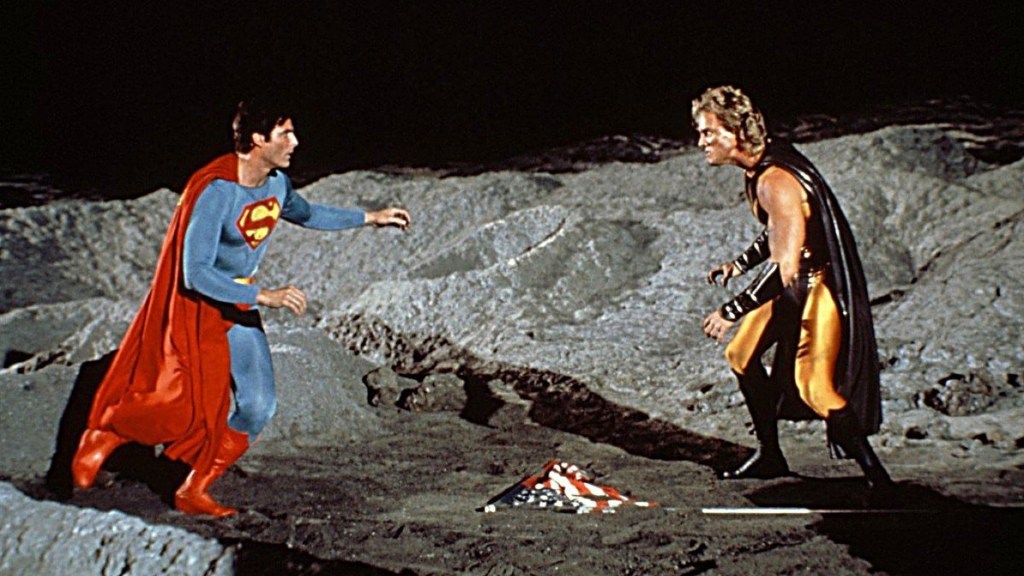
But my mom bought us a DVD set of the four Christopher Reeve movies. Reeve stood out because he was able to represent the simplicity of Clark Kent’s goodness, and inject nuance into the portrayal. It wasn’t pure goodness, there was struggle. The struggle generated friction in Clark’s psyche, and that friction generated heat that came off the screen.

But as I watched the rest of the Reeve movies, the simplicity stayed, and the complexities faded away. They strayed away from much of the source material, and began to make Superman the idea derivative of the original 1978 movie. Reeve and Donner’s interpretation was so powerful that their version overwhelmed the collective conscious of the character. The beloved details of the character further faded to the watchful caretaking of the nerds.

In high school, Batman movies were all the rage. Iron Man had transformed Hollywood. The world had become cynical. People often claimed that Superman was a dork. A Boy Scout. He had no struggle so he was uninteresting. Batman and Iron Man didn’t have powers. They were more relatable. In order to make Superman relevant, the creatives at warner brothers made Man of Steel, a movie that in retrospect, tried to subvert the idea of Superman.

Superman is strong? What are the sci-fi explanations for why he’s strong. Superman can fly? How would that look on camera? Superman finds the truth? What if he doubts the truth? Superman is good? Can anyone that powerful be good?

For the normals, (specifically teenage boys who didn’t have time to read comic books) this was an interesting take on the character. It brought Superman to the interesting depths of Batman. Superman is gritty. Why would we trust an authority like that anyway? Maybe Superman should kill if it’s for the greater good.

But in so doing, Man of Steel got rid of many of the details that made the character interesting to the passionate nerds. There were reasons why Superman became a journalist. There were reasons why Jonathan Kent told Clark to do the right thing. There were reasons why Superman floated instead of making sonic booms.

Ironically, the difficulties of balancing Superman the idea with Superman the character had kept general audiences from remembering the heart of the character. Normals don’t want to go to a deep lake. They want to swim in a pool. But if a character is as complex as Superman, it’s incredibly difficult to contain him to a mere swimming pool.

General audiences got cynical. And they started buying the skeptical interpretations of Superman. He’s too powerful. He’s uncool. No one can really be that good.

In the depths of the lake, nerds know that these are the arguments of Lex Luthor.

On Superman’s 80th anniversary, I got a compilation of Superman comics at South by Southwest. In the very first issue, he saves an innocent man from the death penalty, he confronts an abuser, he stops a speeding car with his bare hands to save Lois Lane.

In following issues, he confronts a corrupt senator, stops an unjust war, fights street gangs, and arrests Adolf Hitler and Joseph Stalin. He is “the champion of the oppressed, the physical marvel who has sworn to devote his existence to helping those in need.”

Superman is strong. Superman can fly. Superman finds the truth. Superman is good.

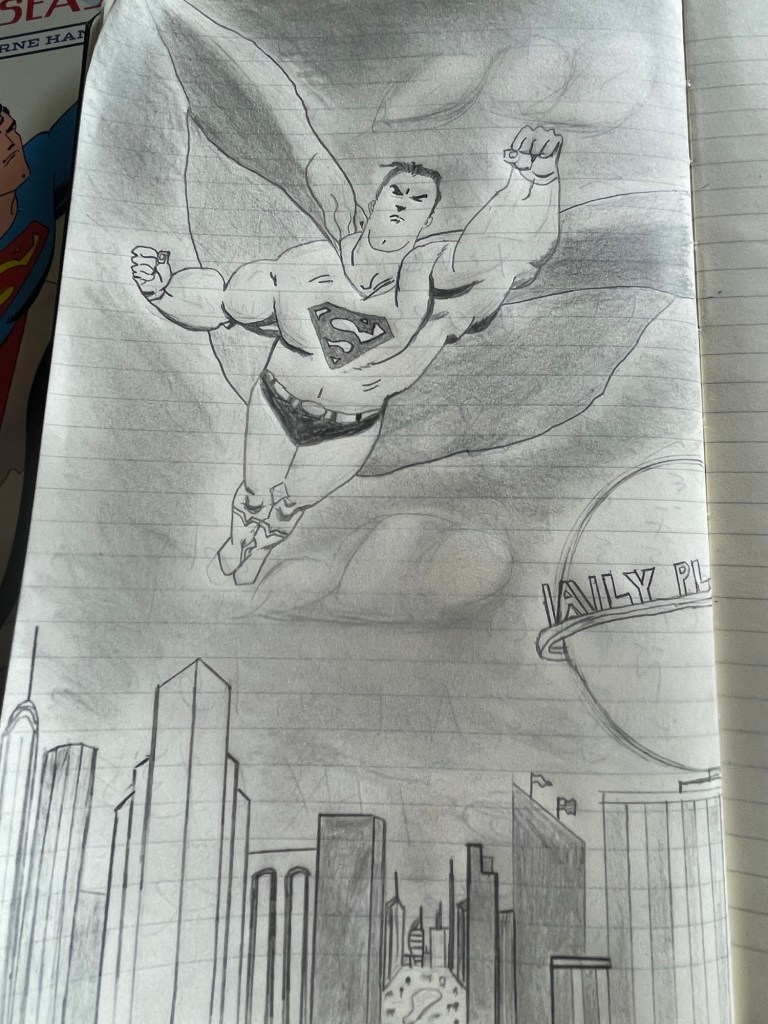
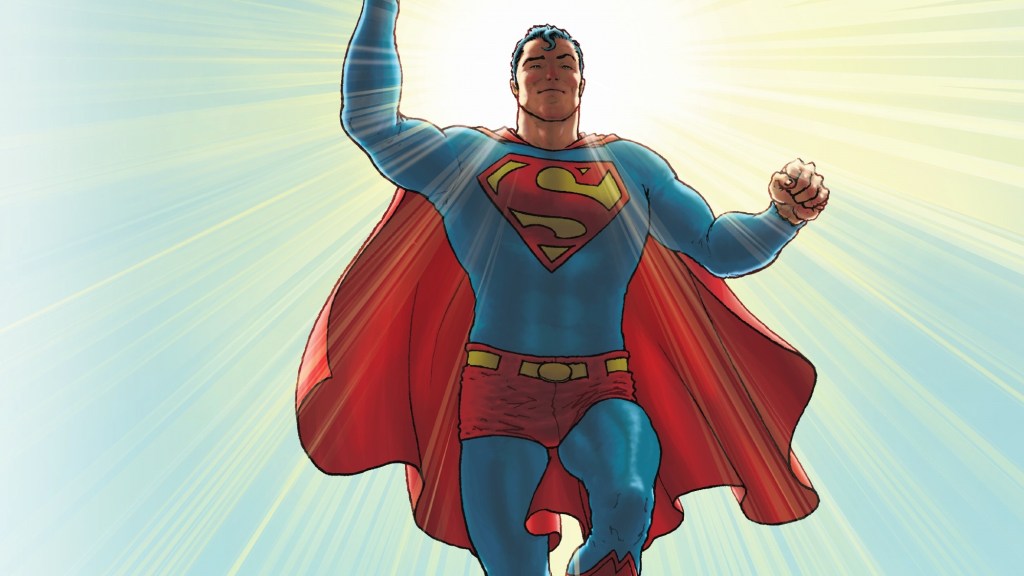
When James Gunn announced that he was writing and directing a Superman movie, he recommended a bunch of comic books. I bought Superman: All Star and Superman for All Seasons. I’ve slowly but surely gone back to the roots of the character. Superman is a good person who wants to do the right thing. He is super because his desire to do good is so pure, and because his unique powers give him the ability to do so.

As I read these children’s stories, and read the nuances that adults have put onto them, I’ve learned that I want to be like Superman. I want to do the right thing. I want to use my abilities to help people. I want to soar. And as I get older, I realize that there is a cynicism that stands in opposition to Superman. No one should be that powerful. You shouldn’t trust people who are that sincere. No one can be that good.

I don’t think that any one person can solve our problems. And I don’t think that we should blind ourselves to the complexities of the world. But I think we should take a lesson from those Kansas values. The values that Clark learned here on Earth. That right is right, and if you’re able to see the truth clearly, you have the responsibility to do the right thing.

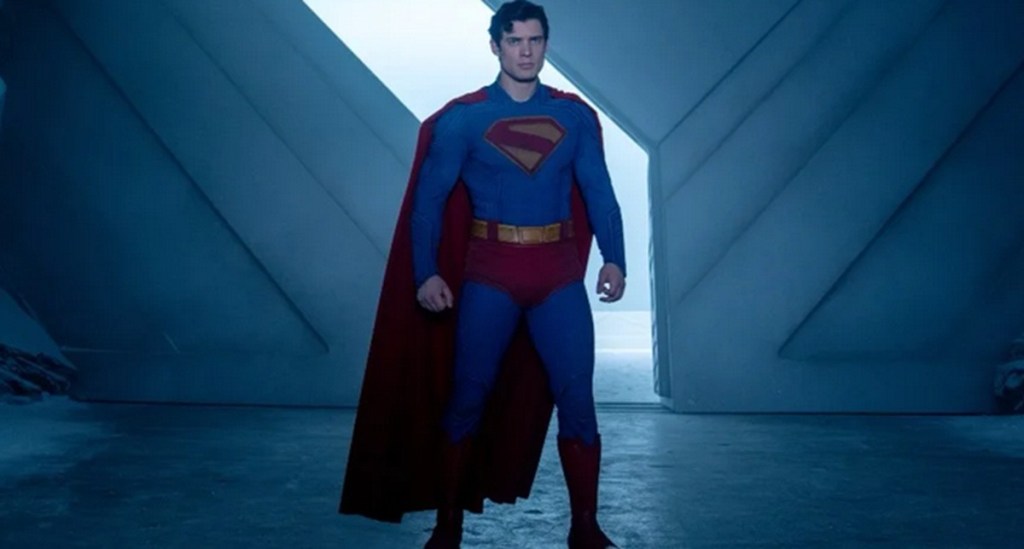
I think that’s what’s brilliant about Gunn’s new movie. That he was able to see the cynicism in the world, and instead of bending to it, adapting Clark to that darkness, he made Superman stand in opposition to it. The citizens of Metropolis are struggling in part because they don’t trust someone without an ulterior motive. They don’t trust Superman to not stab them in the back. That’s something that Lex Luthor exploits. Clark’s burden is that he needs to prove himself trustworthy in an untrustworthy world.

That right there is a story. That right there is an adventure. It’s true to the 87 year history of the character, and it’s true to the movie, the story that Gunn is telling in a two hour runtime. That’s something that can capture the character and the idea all at once. Something that can provide friction, and that can get children to look up in hope. They can be that good. They can fly.

It’s a difficult feat. But I think it’s something nerds and normals alike will appreciate.

Mickey Barnes and the Cycles we Tolerate

Mickey Barnes is a loser. That’s what everyone tells him. He’s recycled waste. He’s garbage. He’s a test dummy. He’s lesser. He’s unsophisticated. He’s expendable. After hearing it over and over, it’s also what he tells himself.

Director Bong Joon-Ho has always played with satire. Poking fun at how we think we’re above the systems we live in, and showing how those systems keep us in these cycles of abuse. Memories of Murder shows how the detectives are held back by their own ineptitude and the lack of systemic support for their investigation. Snowpiercer’s climax is an argument about weather our system of oppression is self sustaining, and if we’re doomed if we break the cycle. Parasite won best picture after showing how capitalism fuels the anxieties of those at the bottom and the top of its hierarchy.

Director Bong’s latest work Mickey 17 is no different from his prior works. It uses sci-fi cloning to show how workers are seen as expendable, and how capitalism keeps them in oppressive cycles that devalue their worth. “He signed up for this.” “It’s his job.”

But I think that what people have overlooked in the latest film, is not what Bong says about cycles of dictatorship, capitalism and colonialism, (those metaphors are present and obvious) but the ways in which cycles of abuse effect the people experiencing the abuse. And how those individuals get out of it.

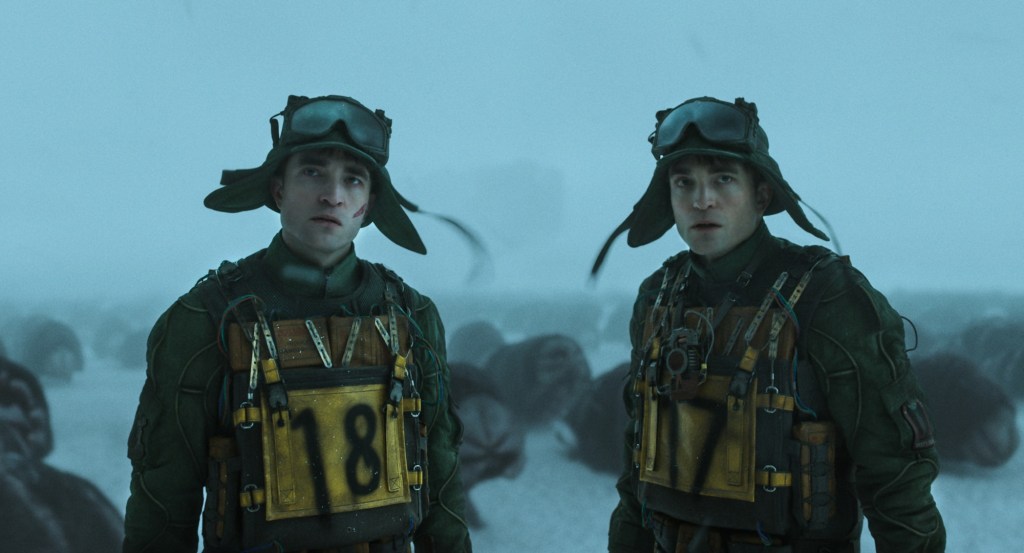
Mickey Barnes (Robert Pattinson) is down on his luck. He’s been without a family for most of his life. His mother died in a car crash he blames himself for, and he’s wandered earth looking for some comfort. His “friend” Timo (Steven Yeun) has had several schemes to get them ahead in life, until they get caught by loan sharks who demand payment with interest, or a death recorded in 32K. Mickey and Timo choose to leave for the planet Nifelheim instead. But while Timo can talk his way into a job he’s unqualified for, Mickey doesn’t think he’s worthy enough to be valued as a member of the interplanetary expedition. Instead, he gets on the ship by signing up to be expendable.

Mickey will now be the colony’s guinea pig. It’s crash test dummy. It’s proleteriat. He’s been scanned into the system, and will be cloned and reborn every time he dies. So he’ll be the test for radiation, vaccines, expeditions, you name it. He’ll do it with a faux smile on his face.

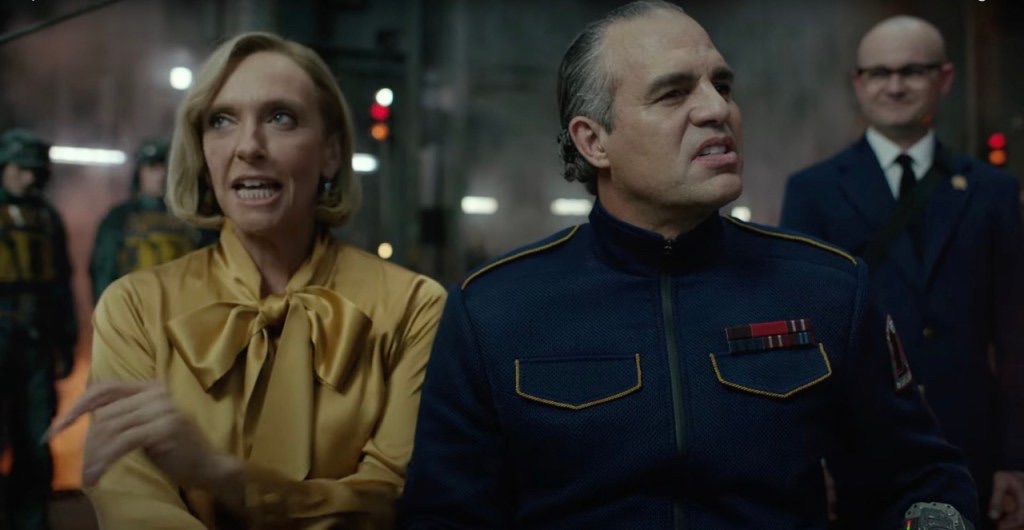
This is all in the name of spreading the human race to new frontiers. The failed politician Kennith Marshall (Mark Ruffalo) rules the colony with an iron fist. He manages labor, counts calories, dictates relationships, all in the name of the betterment of the colony. It’s all for the good of the colony. It’s for Mickey’s own good. He’s being useful.

The cycles continue as Mickey’s body count racks up. 6, 8, 11, 14, 16. Whenever he suffers, he believes it’s punishment for something he did. He believes that by suffering for others, he’s paying back his debt. Everyone treats him like shit. He’s reborn from recycled matter after all. So he learns to believe it. Why else would he be suffering so?

The only person who seems to value Mickey for Mickey, is Nasha.

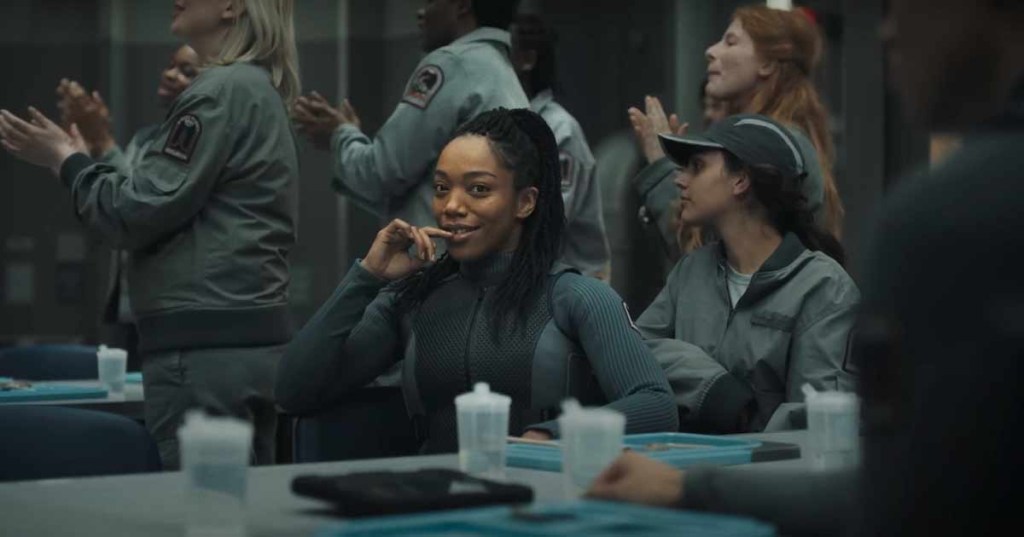
Nasha (Naomi Ackie) is a fellow passenger on the interstellar ship. From day one, they form a connection. They fall in love, and have sex despite the strict regulations that Marshall puts on such strenuous caloric activities. Despite the fact that Mickey is mistreated by everyone else on the ship, despite the fact that Mickey is literally made to suffer, she finds value in him. She comes back to the new Mickey whenever he’s reprinted. She defends him when he’s bullied. She comforts him when he suffers.

For all of the sociopolitical commentary in the film, the allusions to Scientology, Kim Jong-Un, colonialism, the red hats, Mickey doesn’t begin his journey of self discovery with some ideological awakening, but with another person finding value in him despite the lies he tells himself.

Upon landing on the planet, Mickey, on his 17th reprinting starts dying in quick succession. He gets blamed for the death of a fellow colonist when she tries to kill one of the native “creepers” and is sent out into the cold with less rations until he can bring back a creeper as punishment.

He finds one, and despite his pleas that he’s “good meat” the creepers don’t want to eat him. We later learn that they found value in him and decided to save him. He’s copied and the plot goes into full gear when he returns to the ship to discover that a new Mickey 18 has been living on the ship for several hours. Mickey 18 has been reprinted incorrectly, and acts in a psychotic way, but in a way where he stands up for himself. Unlike all the Mickeys before him, Mickey 18 is mad. Mad at Timo, mad at Marshall, mad at everyone who treated him like trash. Who treated him as disposable. But he’s mad at Mickey 17 most of all. Who thanks Marshall and everyone else for the abuse he suffers.

Mickey 18 is the one version of Mickey that doesn’t blame himself. He’s the one version that sees through everyone else’s bullshit. He’s the one version that will call out Mickey 17’s bullshit.

Once Mickey can see that other’s see his worthiness, despite his own self deprecating thoughts, he can learn to see how his suffering isn’t his fault. He can lean that he’s lovable, that his perspective and empathy is valuable to others. That he doesn’t need to be disposed of to be valuable to the colony.

Human society can’t be solved. It can be improved, but despite the grand theories and ambitions, we’ve failed to make the systems that run our lives work for everyone. We scapegoat, we exploit, we are blind to our own faults. Mickey 17 has all of the societal critiques in all of Bong Joon-Ho’s films, but what’s interesting about it, is that the arc of the film is more about Mickey than about the society he’s a part of.

We have a lot of problems to solve as a society. We need to learn how to recreate our systems to value each other instead of treating each other as expendable. But in order to move forward, we need to learn how to love each other. To break the cycles of abuse in our personal lives, and stop telling ourselves lies that others tell us to keep us down.

Mickey 17 is a film full to the brim with ideas. But it’s glue, the arc that keeps the film together in one big, beautiful narrative arc, is that of Mickey Barnes, learning that he can eventually stand up for himself and break the cycle of abuse. Learning from friends and lovers, that he has worth. Learning that his suffering isn’t his fault, and that he can love and be happy. And that’s ok.

Nosferatu and the Nature of Evil

What is evil? Is it the mere act that is taken by a man? Is it man’s intention? Is nature, in its violence and indifference to suffering, evil? Is evil a compulsion that the strong can resist, and the weak indulge in?

In Robert Eggar’s reinterpretation of the 1922 film by F.W. Murnau, he doesn’t provide an easy answer. But he probes the question in his 2024 film Nosferatu. It is not only a question asked by the structure of the film, but directly by the protagonist. “What is evil? Does it come from outside? Or from within us?”

Modern society is obsessed with finding clear answers. We want a formulaic response to the evil we see in the world around us. The evil in the world comes at us every day, but we don’t have an easy way to respond to it. Amongst a firehouse of shit, we struggle to see the light, or else we give up and decide to embrace it. Eggars movie, consciously or not, digs into these questions while providing audiences all the traditions of horror that the original Nosferatu: A Symphony of Horror invented.

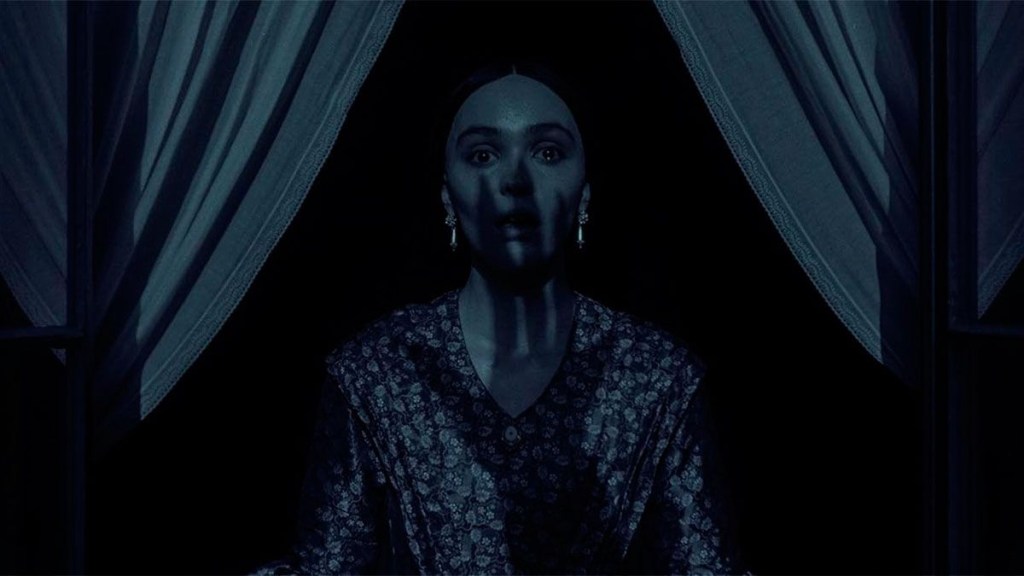
The film follows Ellen and Thomas Hutter. A married couple who are attempting to live a pious, modern life in 19th century Germany. Ellen has found freedom in her marriage. A spiritual bliss that keeps the darkness away. Thomas has a job at a real estate firm, a career that is quintessentially of the modern age of capital, speculation and progress.

But Thomas must go east to pursue his career. He must sign a deal with a mysterious Count Orlok to buy a home in the thriving German port city. Thomas encounters strange Gypsy’s in the east, whose traditions of communal living, virgin sacrifice, and impaling of corpses unsettle his modern morals as well as his Christian upbringing. Bodies should not be desecrated, and this crude ritual is backwards.

Upon arriving at Count Orlok’s castle, Thomas learns that Orlok wants to move to modern society where these rituals are not practiced. Modern society has solutions. Hysteria is countered with absynth, rapists are reconditioned in hospitals, the plague is caused by rats. Modernism is a proposition that problems can be solved with science, and a moral rationality that moves ever forward.

Count Orlok wants to be a part of this society.

Ellen had something missing in her life since she was a child. A sense of pleasure, a sense of freedom, something. Because of this lacking she invited Nosferatu into her life. He was attached to her. He was a relief from her depression, her melancholy. She felt shame that she let this evil into her life, but it was to fill something that was lacking, and it became a part of her.

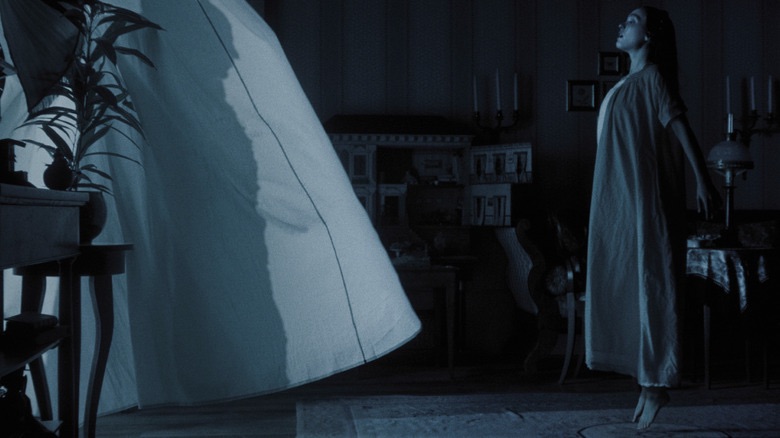
Eggars makes this connection not only in the story, but in the visuals of the film. He has Orlok’s shadow meet Ellen. His hand reaches across time, haunting her, controlling her. He match cuts between Orlok hunting Thomas, and Ellen moving like a ghost in her home. He gives Ellen some of the few jump scares that aren’t Orlok’s. They’re connected in the very grammar of the film.

When Orlok come from his castle to Germany, Ellen enters fits of possession. Her friends the Hardings, try and help her by getting her to repress her episodes. They tie her down, they lock her in her room, they compel her to behave normally. These fits can be explained. They can be made sense of. They can be solved. Yet when she tries to explain her distress and her connection to Orlok they dismiss her. When death visits their home it is not a monster that kills, but a rat. The Hardings are modern people who reject the ramblings of hysterical women and gypsies.

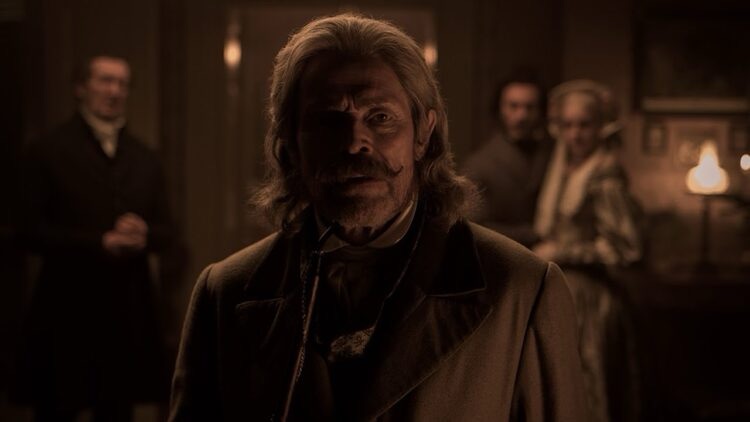
Desperate, the group turns to Willam Dafoe’s character, Professor Franz. He still studies the nature of evil. Why people drive steaks through corpses. Why creatures haunt the night and fear the light. He declares that evil is not some equation that can be solved, it is the devil. A night demon. It, like death, like a plague, only wants to consume until the entire earth is eaten up. It is not logical. It is not explained. It cannot be ignored or repressed. Yet it must be confronted.

When Ellen begs the Hardings to see her pain, when she tries to explain to her husband Thomas why she turned to Orlok in her moment of weakness, she brings up her melancholy. She tries to use it as an explanation. She tries to convince her lover and friends that she isn’t a bad person. She tries to deny that the evil she is connected to is not a part of her. That if she can understand why she turned to Orlok she can easily turn away.

The thing about depression is that it is a disease that is a symptom, rather than a root cause. There are aspects where one gets into looping cycles of learned hopelessness, but depression is your psyche telling you that there is something wrong with yourself and your life. It is compelling you to treat others poorly. It is compelling you to treat yourself poorly as a manner of self defense. Without fixing the underlying circumstances that lead to depression, you are bound to repeat the cycle, and circle back to the sin of despair.

In order to defeat evil, we must confront it. It must be brought into the light.

Orlok wants to settle into modern society because that’s where he can thrive. When people throw out the wisdom of the ancients they do so because they think their ancestors are backwards. In some ways they are. The gypsy’s in nosferatu could never defeat the vampires. They staked them to the ground instead of bringing them into the light. But the modernism that surrounded Braum Stoker’s Dracula led to the evils of England’s slums imperialism and factories. The modernism that surrounded Murnau’s Nosferatu led to the evils of the Nazi party, and the socialist empire of the Soviet Union.

People in the 19th and 20th centuries thought they could solve the evils of disease, of capitalism, of empires and depression. But by trying to repress these compulsions, by trying to ignore the wisdom of the ancients, by trying to solve the problem of evil, those societies merely invited them in.

I think it’s fitting that in the 21st century; when we are so isolated from tradition and community, when nations are at war, when depression plagues us and industrialists think they can solve the evils of the world with more technology and more capital, Robert Eggars turned to the traditions of literature and silent cinema to tap into what evil really is.

Asteroid City and the point of it all…

Wes Anderson’s 11th feature film is a repetition of everything else Anderson has done before. He uses much of the same acting company, the same cinematographer, and one of the same co-writers as his prior projects. This repetition has split those who watch his work between those who dismiss him as nothing deep, all aesthetic without substance, and those like me who’ve gotten on the proverbial train and don’t plan to get off.

But for me, this repetition represents a refinement of the themes the writer-director has been exploring since he tried to make Bottle Rocket in 1994. That year, Anderson, Owen and Luke Wilson and their small crew tried to make their feature screenplay with money from their fathers. When they failed and ran out of money, they took their footage and submitted it as a short to Sundance. His themes and style have been there for 29 years. For me, Anderson has always been the same guy, telling stories about broken and sad people, hiding behind a facade of civility. What’s changed is his genres and mediums, all while he’s advanced in his technical prowess, and his willingness to lead the audience into deeper and deeper themes.

Asteroid City is no exception. Spoilers below.

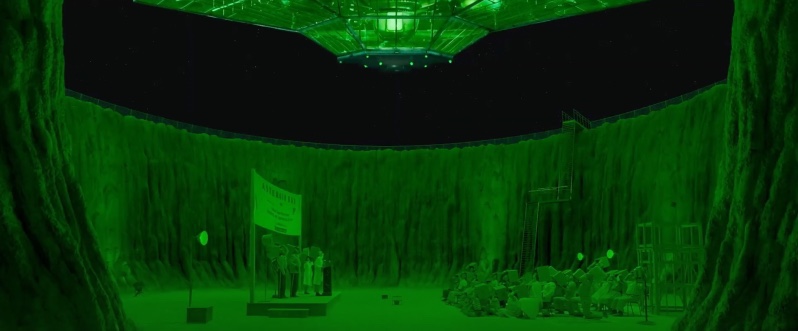
Asteroid City opens jarringly with a message from a TV presenter played by Brian Cranston. The movie we are watching is in fact a television program which recreates a play that was written by a Southwestern playwright portrayed by Edward Norton. All of the characters we know from the trailers and the posters are presented as actors, who are to play the characters in a theatrical performance on the stage. The film then goes from a crisp black and white in academy ratio to a vibrant technicolor in scope. The theater performers, through the art of acting, are presenting the story in a vibrancy that mimics the emotions of the cinematic.

The credits roll as we watch a train roll through the American desert. The locomotive carries nuts, fruit, passengers, automobiles, and nuclear weapons. There is a deep darkness lying alongside the pristine desert that is bathed in “clean light.”

We then meet Augie Steenbeck, a war photographer played by Jason Schwartzman who needs to take his four children to stay with their Grandfather, played by Tom Hanks. But Steenbeck hasn’t been able to tell his children the awful truth that their mother has been dead for three weeks, and that they are on their way to bury her. The family’s car breaks down in a land scarred with craters from nuclear bombs and a crater from a meteorite that landed 5,000 years ago.

Steenbeck is an atheist, and is unaware of how to tell his children that their mother has left them. That entered the unknown beyond this mortal coil. He isn’t Episcopalian like his father in law or his children, so he has no honest answers for them. All he knows is that the passing of his wife into that dark unknown has left him scarred, and he doesn’t know what to do.

Steenbeck’s son Woodrow, played by Jake Ryan, is interested in the unknown. He is a junior stargazer who’s won a science competition where he and other stargazers present inventions to the scientific community and the US military while gazing at an astronomical anomaly inside the crater.

There are a lot of important characters and subplots that intersect Augie and Woodrow’s journey as they process the loss of their wife and mother. Stanley Zack (Hanks) challenges Augie about how he’s running away from telling his children about their mother’s death. When Augie says he couldn’t find the right time to tell them, Stanley says the moment is always wrong. Midge Campbell (Scarlet Johansson) is a movie star preparing for a roll, running from her past relationships and taking her daughter to the stargazing event. She challenges the way Augie takes pictures with no regard to other’s feelings, how he uses his precise photography to control the chaos of the wars of the world, and the grief swirling inside of him.

Midge’s daughter flirts with “brainiac” Woodrow, while she and the other cadets challenge him to come out of his shy shell. Dr. Hickenlooper (Tilda Swinton) challenges Woodrow to keep exploring the vast unknown of space, despite the attempts of the government and military to control the town, the cadet’s inventions, and the unknown itself.

But to me, the real heart of the story comes when the group is visited by an alien being at the stroke of midnight. The alien steals the meteorite and leaves, posing endless questions for the characters and the audience. Why is it here? What did it want? What will it do? Is there a meaning to the universe? To life? Is there a point? Does the alien have answers?

These are classic questions raised by countless characters in the annals of American science fiction, and must be raised by any entry in the genre. In Close Encounters of the Third Kind, Spielberg’s protagonist nearly goes mad trying to find the answers, pushing his family away in the process. But this is where Anderson diverts from most other sci-fi. By using his same old techniques, his same old repetition that he is so often decried for, Anderson reaches a profundity that few other entrants in the genre are able to achieve.

Throughout the telling of the story of Asteroid City, from fourth wall breaks, to set design, to act breaks, we are reminded that this is a theatrical performance. Brian Cranston told us at the beginning of the movie, and throughout the rest of the movie, he tells us some context on how that play was made.

Edward Norton plays Conrad Earp. A renowned playwright. He wanted to tell a story that would transform people’s lives, that would transform the actor’s as they were performing it. We also learn that Earp had an affair with the actor who plays Augie Steenbeck, and that Earp was inspired by that actor and wrote the part of Steenbeck around him.

But right before production, Conrad Earp dies, leaving the director and the rest of the cast with no guidance. There are no answers from the play’s creator. The actor playing Steenbeck is distraught. We cut between the actor in the play, and the character of Steenbeck. Both looking for answers about the point of it all. The meaning of what they are doing here. If they are helping his children grow up properly, if they are helping the audience understand the intent properly. But they are given no answers. They are only left with the crater of their grief. Surrounded by other people trying to figure out what’s going on in this chaotic world. Trying to keep themselves from falling into the abyss of madness while what we knew unravels before us.

In this moment, the actor playing Steenbeck stops the play, runs across the backstage and asks the director (Adrien Brody) if he’s doing it right. He confesses that he doesn’t know his motivation, the intent of the author, and he wants to know if he’s messing it up. The director tells him that he’s doing it right. He doesn’t need to understand everything, he just needs to keep playing the part, and the rest will follow.

“All the world’s a stage and all the men and women merely players.”

We don’t have all the answers. Atheists and Episcopalians alike can’t grasp the vastness of the universe, or the emptiness of our own hearts. The playwrite might have thought of everything, but they’re not able to tell us how to act in our own play. We must keep acting, and the act of acting in our own play will help us connect with the audience even if we can’t fully grasp the unknown. We must keep acting, and the act of acting will help us guide our children through their grief. It will help guide us through our own.

We are good enough. Even if we don’t have all the answers. And that’s the point.

Asteroid City opens in New York and Los Angeles on June 16th. It expands wide on June 23rd.

John Wick, debt, and love.

Spoilers for Chapters 1, 2 and 3 below.

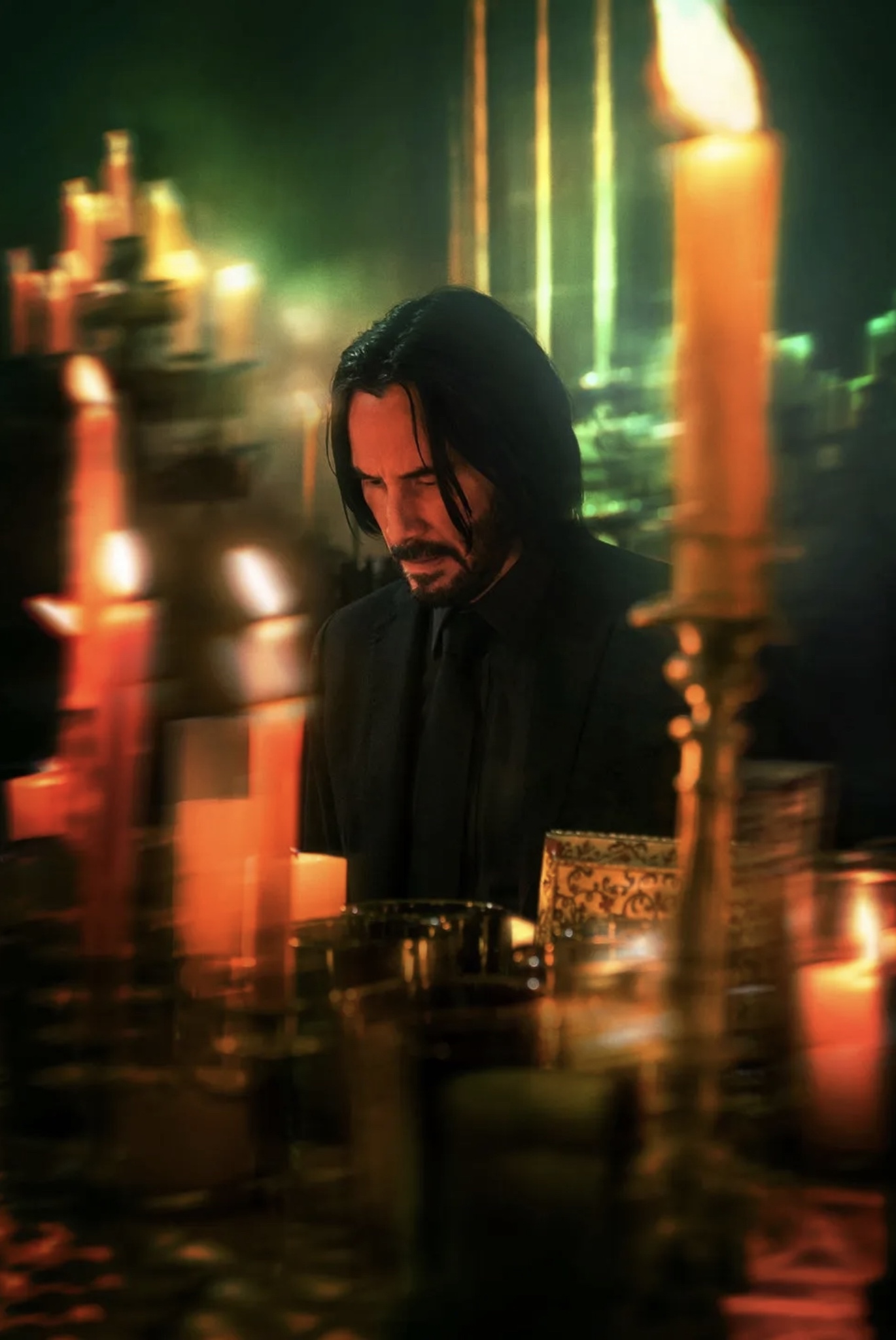
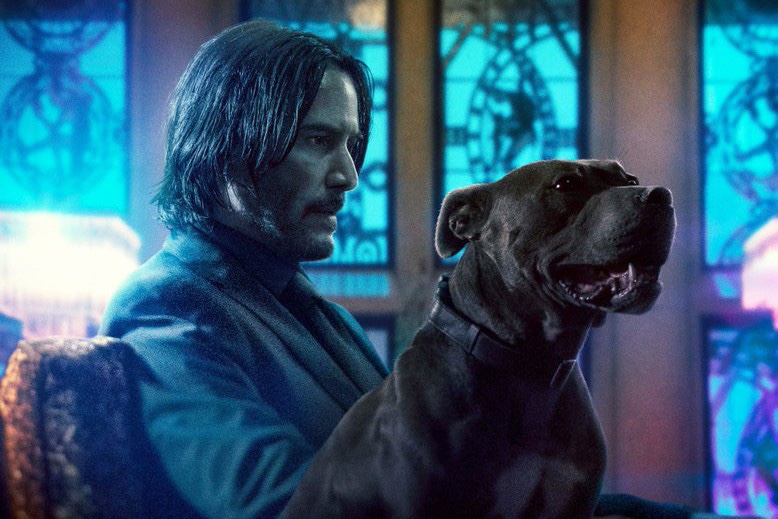
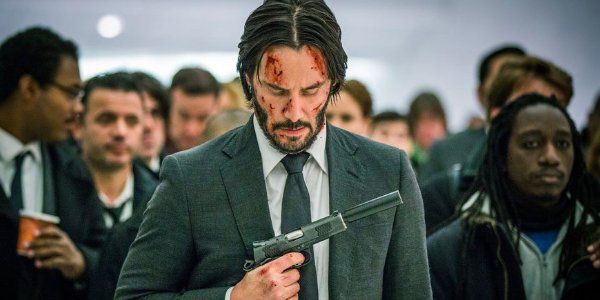
John Wick, a 2014 action programmer written by Derek Kolstad, directed by Chad Stahelski, and starring Keanu Reeves, has been about grief from the beginning. The film opens with John, stumbling to the ground, his heart bleeding onto the memories of his wife he keeps on his glass phone. John’s wife Helen has passed away from cancer, leaving John without the love of his life. Without the person to whom he owes nothing, and everything. Helen needed nothing more than John’s love and attention, and John nothing more than hers. But as the film goes on, we realize that John’s life is that of running away from his web of relationships. Professional relationships and debts that demand John’s attention, and that must be repaid.

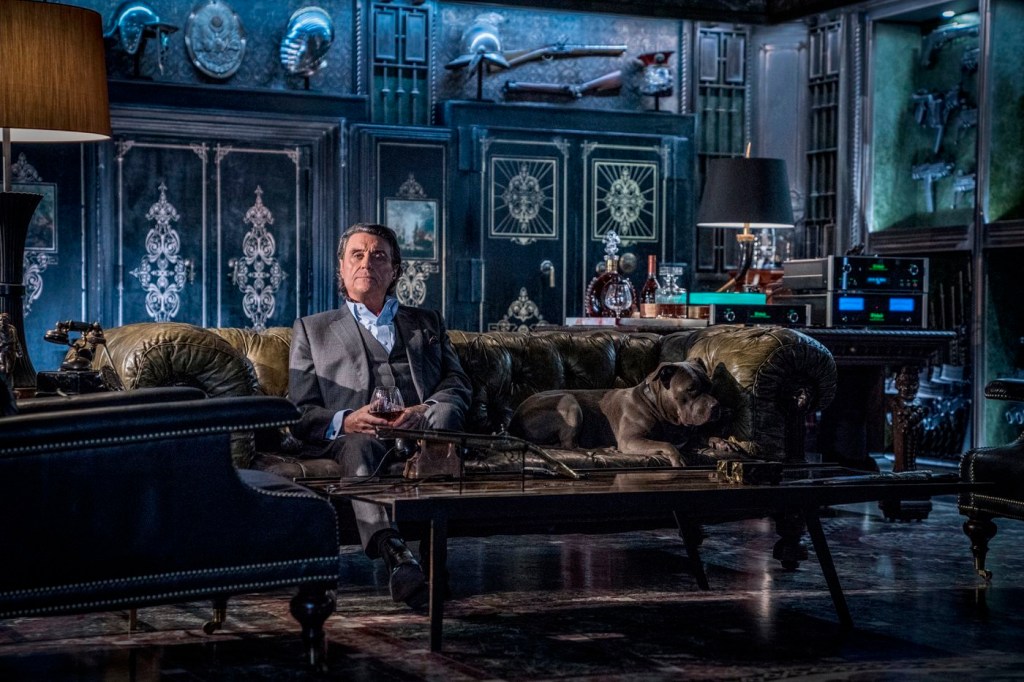
If John’s love for his wife is one of selfless unity of souls, then John’s relationships to everyone else in the world is that of transaction. A son of a Russian mobster kills John Wick’s dog… John must have retribution. The mobster’s men are slaughtered… he must go after John. The underworld that John enters is not that of forgiveness but of debt. Scales that are monitored by an advanced bureaucracy and seemingly complex codes and rules. But these rules are simpler than they appear. If you give someone respect, then you will be able to conduct business. If you disrespect someone, as Alfie Allen’s Character disrespects John Leguizamo, then your relationship is over. Passion floods the senses. It overflows until the world of the assassins is inundated with violence and chaos. That is why the organizations have created the rules of the high table. Canals that channel the passions of the members into a violent, but controlled order.

John understands this world better than any other. He is known across the underworld. And his legend as the boogieman extends even further. John has lived many lives, and known many people. This is why he was so insistent on leaving the life behind once he found Helen, every one of his relationships came with debts that tangled him up further into the world he wanted to escape. But he was brought back in because he was wronged, and each action he makes towards justice further brings others looking for retribution.

In chapter two, this is perhaps the most acute. John seemingly gets out of his obligations to the underworld, miraculously for a second time, when Santino D’Antonio requests John to go back into the fold to fulfill his debt to him. Santino is using the rules of debts and obligations to get John to murder his sister, and take her place on the high table. In so doing, Santino is using the rules to take advantage of both John, and everyone else. The rules may protect us from our base instincts, but they also can be a weapon in themselves.

This is why John walks alone. Without his wife, he can’t trust anyone in this world, yet he knows so many. He is a man who is known by all and who trusts no one. He must use the rules to survive, but he can’t trust those either.

In chapter two, he is excommunicado for murdering Santino on continental grounds. Just retribution for what Santino did to John, and for what Santino was planning on doing to New York. Yet by breaking the rules John must run from every assassin in the city trying to claim the price now placed on his head. John flees to Morocco, and asks The Elder for a way out, and The Elder asks him to murder Winston for giving John an hour to escape from the assassins.

John was given mercy by Winston, who believes in second chances just as much as he believes in the rules. It is through John’s friendship with Winston that he is able to escape from execution. Just as John’s relationship with Helen allowed him a out, his relationship with Winston allowed him a way out as well. While John enacted violence on countless in his days as an assassin, he also showed plenty of people mercy, knowing the power of escaping the inferno he’s been trapped in his whole life. Mercy, just like retribution, is cyclical. Just as the rules of vengeance give John a Newtonian sense of justice, the rules of mercy give him an escape hatch from it. But it must be offered, and it must be received.

The world of John Wick is one of thrilling action and violence. But while it may seem senseless, it has a precise logic to it. When we are wronged, and when those we love are wronged, justice must be served. Actions have consequences. But the flip side of that is that in order to escape the violence, John must be given second chances, and he must give them in return.

Love doesn’t care for debts, and just as we must follow the rules to ensure violence doesn’t overflow into every aspect of our lives, we must break the rules for love to ensure we keep our souls alive. That we don’t become mindless killing machines. That we retain our humanity, while we seek justice at the same time. When John does this, he’s able to reconnect with people he once knew. In relationship, not transaction. Perhaps if we do this as well, we can too.

Complicated simplicity in The French Dispatch

Wes Anderson has been one of the most singular figures in twenty first century cinema. His visual style is instantly recognizable, but hardly ever imitated outside of the wardrobes, interior decor, and instagram feeds of his admirers. He has been so outside the mainstream of Hollywood’s visual grammar that he’s been often maligned by those detractors who claim his work lacks any depth.

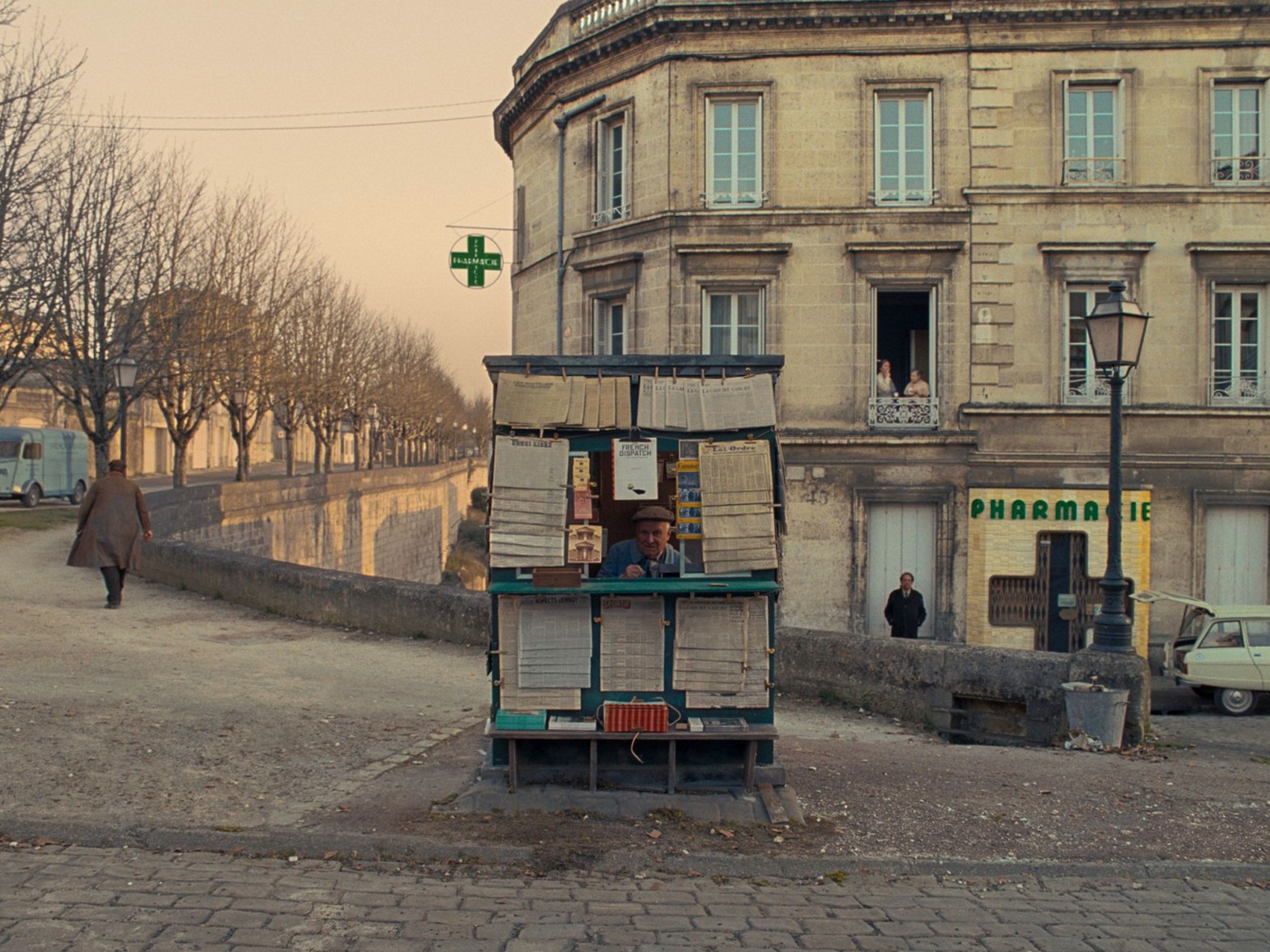
There is perhaps no better example of this dichotomy than in his latest work, The French Dispatch (Of The Liberty Kansas Evening Sun). An anthology, the film goes so much further into Anderson’s idiosyncrasies that it can appear that he’s no longer interested in delivering a satisfying narrative. However his storytelling instincts are as strong as ever. He’s merely achieved more control and sophistication over his craft as a director, and is diving into one of his longtime influences, The New Yorker to tell a story in a way no one else could.

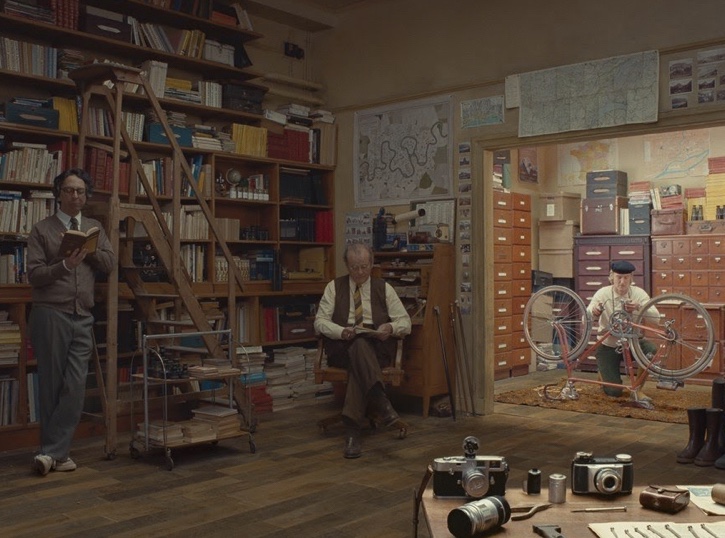
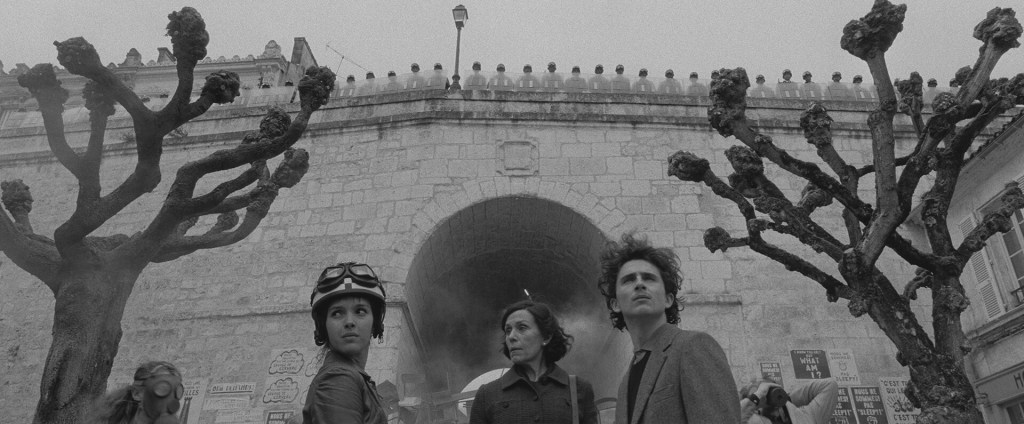
The French Dispatch translates the final issue of the fictional magazine of the same name. It simultaneously tells the story of the written word and it’s supplemental materials, and of the process of writing it. In so doing it is an ode to journalism; not that of All The President’s Men or The Post, which expose the evils of our corrupt systems and seek to bring light to the public for accountability, but those of culture and human interest. The film’s preoccupation, and the preoccupation of the fictional writers, is that of people. How we live together, how we express ourselves and how we understand our place in the society we’ve chosen, or have been born into.

This cultural exploration is incredibly sophisticated. It uses cutaway drawings, non linear storytelling, photographs, plays, animated comic books, black and white cinematography, color cinematography, changing aspect ratios, soundtracks, TV interviews, the score, anything and everything that it can to convey what the written word can do visually. Yet the stories it tells are mostly comedic. While all of Anderson’s movies are comedies, the anthology structure of the film makes it appear to lack depth on a casual viewing. Because of this many are dismissing this as a lesser work of Anderson, which I must argue is a fatal mistake.

Spoilers below.

The first story, The Cycling Reporter is Owen Wilson’s character Herbsaint Sazerac moving though the fictional city of Ennui. He recounts the different neighborhoods and the people, animals and smells that populate its streets with a familiarity that in my experience can only be known through walking or biking through a city. In addition to speaking of Ennui’s people, it speaks to the changing nature of cities. There are things that stay the same, like the names of neighborhoods or the nature of choirboys disturbing passerby’s after mass, but things like population, shopping centers and the automobile naturally lead to change; for better and for worse.

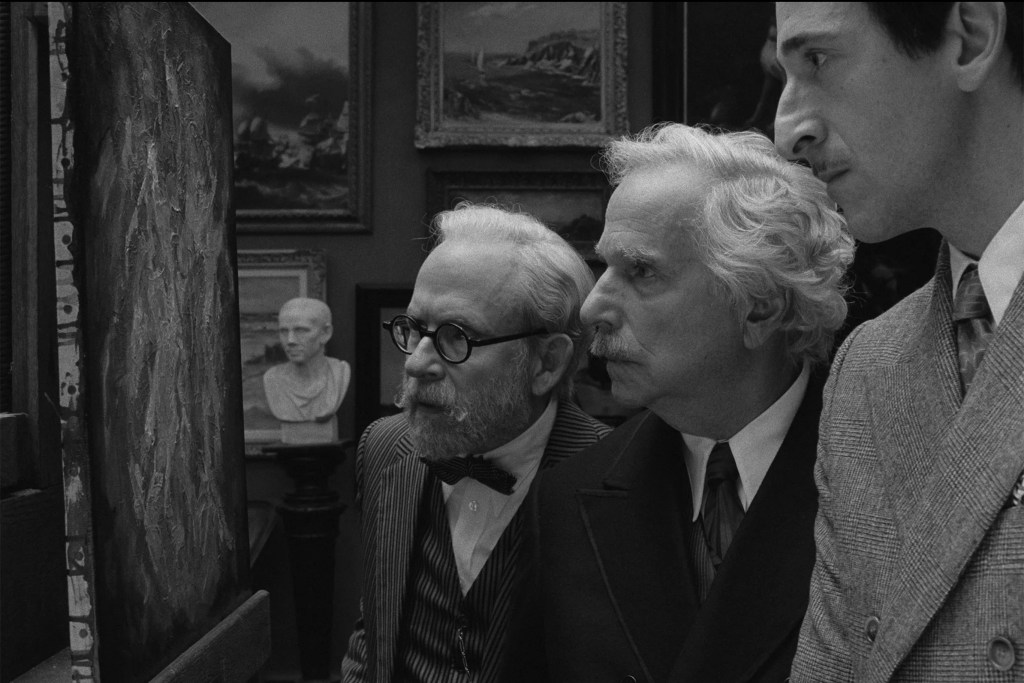
The second story The Concrete Masterpiece, follows Tilda Swinton’s character J.K.L. Berensen as she recounts the story of one of the 20th century’s most influential, fictional modern artists, Moses Rosenthaler, played by Tony Revolori and Benecio Del Toro. Rosenthaler is mentally disturbed, and is in Ennui’s insane asylum for murdering two bartenders. He is consistently on the verge of suicide, but what keeps him from ending his life is the process of making art, and his love for his muse and lover, his guard, Simone, Léa Seydoux. Adrien Brody, an art dealer imprisoned for tax evasion, is determined to make Rosenthaler famous, and to profit off of it.

The story spirals into the obsession over Rosenthaler’s masterwork “Simone, Naked, Cell Block-J Hobby Room”, and the anticipation of his follow up. Brodie and his uncles, portrayed by Bob Balaban and Henry Winkler are on a quest to manufacture Rosenthaler’s importance in order to profit from it, yet Rosenthaler’s artistic ambitions become too big for them to easily commoditize. The Concrete Masterpiece becomes about how counter cultural movements change the world, and the lengths to which capitalism will go to profit from it; as well as how the act of creation, and those they love keep the artist from losing themselves. It’s about the ecosystem of the artistic process.

The third story, Revisions to a Manifesto, follows Francis McDorman’s character Lucinda Krementz as she follows the student uprising by Timothée Chalamet’s Zeffirelli, and Lynda Khoudri’s Juliette. In it, Krementz is to interview Zeffirelli as he attempts to write a manifesto that will inspire his generation, while telling their parent’s generation what ails them.

Krementz offers to proofread Zeffirelli’s manifesto, which includes background of the movement, the pent up frustration, narcissism and tragedy of the youth culture that is unable to gain any traction in the institutions it rails against. Yet the youth movement is also disjointed, fractured, and unfocused. The student movement started out as an attempt for boys to enter the girl’s dormitory for access to consensual relations, but has spiraled into protests against imperialism, capitalism, and the mere notion that parents know more than their children. Because of this and the infighting that naturally ensues, the revolution sputters out.

Krementz become too involved with the story. She has sexual relations with Zeffirelli, and her revisions to his manifesto become so involved that they in someways sacrifice the spirit of the revolution he symbolizes. She is constantly critiqued by Juliette and other students for sacrificing her journalistic neutrality, and some claim that neutrality never existed. In this way Anderson is commenting on how journalists aren’t truly neutral actors. They have a stake in our society and how we move forward.

Furthermore he comments on how the young need mentors to learn from the mistake of the past, and to sharpen their own ideas to improve them. Again Anderson is making the case for cultural criticism and intellectual rigor by showing how even passion for cultural critiques can lead one astray without guidance.

The third story, The Private Dining Room of the Police Commissioner, opens with writer Roebuck Wright, played by the magnificent Jeffery Wright, recounting one of his articles for The French Dispatch to a TV personality played by Liev Schreiber. In in piece, Wright was supposed to go to a dinner cooked by Lieutenant Nescaffier, played by Steven Park, hosted by Matthieu Amalric’s The Commissaire. The dinner is about to start, when the Commissaire’s young son is kidnapped by a gang of criminals and showgirls. Wright is now to see “police cooking” a nutritious cuisine for lawmen on the fly and on the job, in action.

This final story is on its surface the most adventurous. There’s gunplay, adventure and action in Anderson’s signature style, including an animated sequence hand drawn in Angoulême, France, the same place they shot the live action sequence in the movie. But underneath that surface is some of the most heartbreaking and deep characters in all of Anderson’s filmography.

The Commissaire was once an officer of the Law in one of Frances colonies, most likely Southeast Asia. His wife died shortly after his son Gigi, played by Winsen Ait Hellal, was born. They returned to Ennui shortly after, and bonded over their shared love of police work. It is this bond with his son that drives The Commissaire so passionately, and it is why the sequence has such emotional investment.

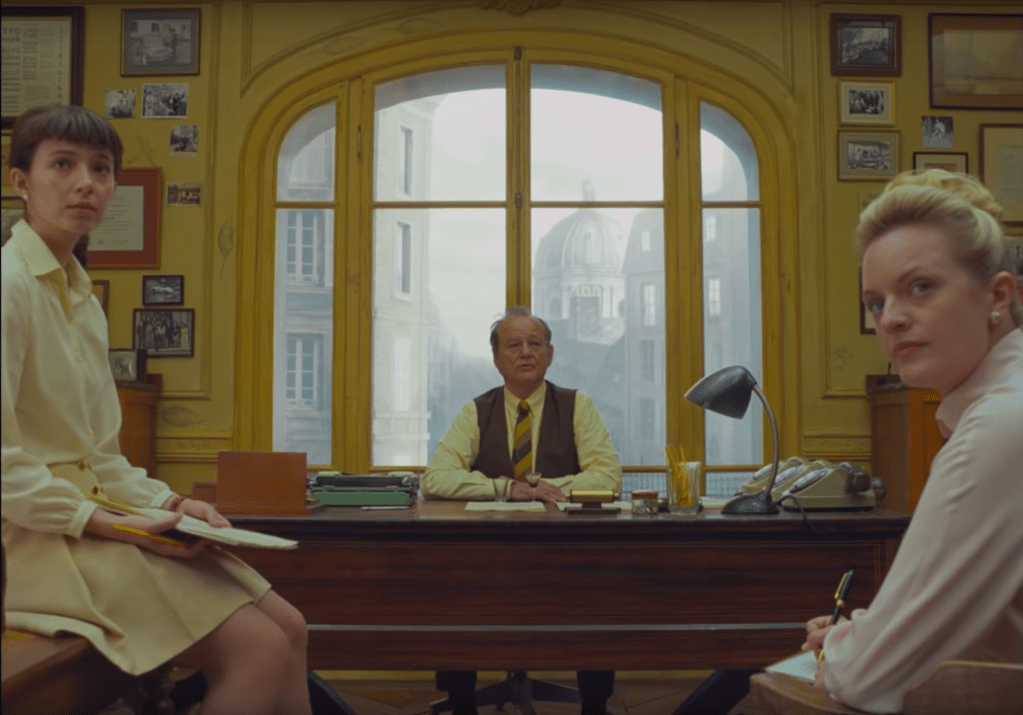
Wright’s character is mostly based on the writer James Baldwin, who spent many years in France to escape the toxicity of America’s racism and homophobia of the 50’s and 60’s. Roebuck is also a homosexual black writer, wandering from place to place looking for purpose and connection. He is able to find it despite persecution, because of the kindness of Arthur Howitzer Jr., played by Bill Murray. Howitzer offers him a job, and more importantly purpose in writing, rigorous criticism that keeps Wright on his toes for decades on.

When the adventure is over, Wright speaks to Nescaffier. Nescaffier put himself in danger because he is an immigrant, and he didn’t want to alienate himself from the rest of his community of officers. Yet despite the danger he found purpose in his cooking, a new flavor. Wright similarly admits that he is also an immigrant, and that he has been drawn to food writing because as a wanderer, he is profoundly lonely, yet a meal with a drink and a fire is a constant source of comfort no matter what street corner he wanders down.

This observation is one of the most profound in the entire film, and to me the one that hits most personally. That for those of us who wander, it is culture, be it food, film or writing, that keeps us going in our loneliness. That the act of creating something for others will never be in vein. There will always be another lonely soul who needed you to pour your heart into what you created. Someone who needed a good meal.

The French Dispatch is bookended by an obituary for Arthur Howitzer Jr. Both the obituary itself, and the moment when his writers and staff realize his death, and begin writing it. Howitzer was born to a newspaperman in Liberty Kansas, and wanted to try a crack at managing a magazine while on vacation in France. He never left till his passing. He spent decades finding and cultivating writers, trying to push them to their best, paying them well, and bringing their work back to his hometown.

By bookending Howitzer’s story, he makes a statement on the value of culture. Howitzer brought these stories of art, youth and food to us. He placed a value in them, and presented them with tact, and craft. He showed us why we should value art and writing by presenting it in such an artful way. Like in The Grand Budapest Hotel, Anderson is making an argument for his aesthetic, his influences and his attention to detail. Culture is important, it helps us understand each other and ourselves, and it helps us get through difficult times. This is what Wes Anderson has done for twenty five years, and it’s what The New Yorker has done for 96 years.

The French Dispatch is like eating a meal made by an old friend. It’s warm, comforting, comes in multiple courses, and it’s familiar. You knew what you were getting when you went into his kitchen. That’s why you entered in the first place. But when you take a closer look at the meal, and when you take a peak into the kitchen to see the lengths this old friend went to to prepare this meal, it should rightly knock your socks off.

It is a film that has impeccable craft, and unexpected depth, while being incredibly entertaining and funny. I truly think it is one of Wes Anderson’s best works. It wold be a mistake to dismiss it, or to miss it while it’s in theaters.

Indication vs Integration and why I’m tired of Marvel

I just saw Shang-Chi. There’s a lot to like about it. There’s Kung Fu, there’s attractive, charming, funny actors in it, and it’s what you expect from a Marvel movie. However I think I understand (again) why Marvel movies just make me tired in our post endgame world. I’m going to be quick, but I’m going to explain a term I’ve use before in these posts: indication vs integration. Big thematic spoilers for some old movies, and light thematic spoilers for Shang-Chi below.

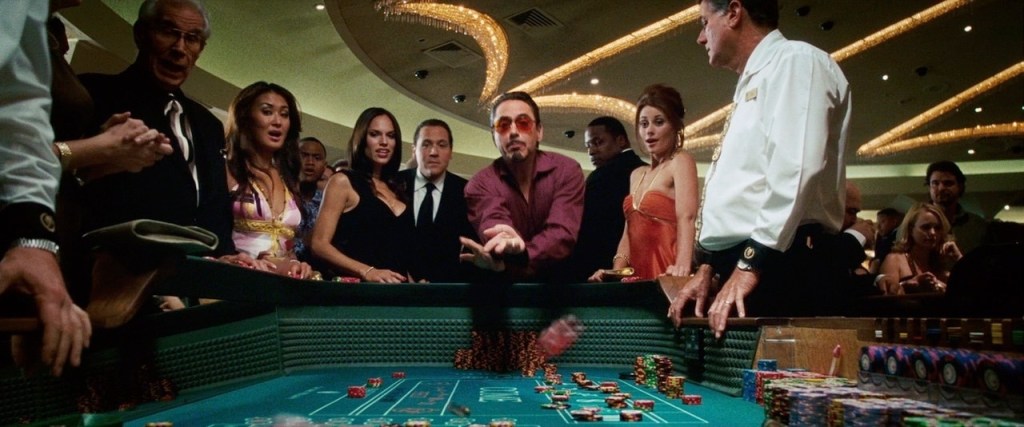
Marvel movies have gone through many phases over the years. And I’m not talking merely about the “phases” that they release at investor meetings anymore. I bring this up to differentiate the “Phase One” movies from what we’ve gotten in recent years. The Phase One movies were largely origin stories, setting up the characters for audiences and giving them origin arcs so they’ll appear in later Avengers movies. A lot of these movies have strong visual choices, and narrative arcs that set the character’s journey’s for the one movie. Tony Stark had a moral flaw, he was an arms dealer, and he had to break out of Afghanistan in order to change as a person. Most of the conflict in the film derived from his flaw, and in order to overcome Jeff Bridges’ plot, Tony had to change as a person. The aesthetic choices, conflict and narrative arc were all connected to move Tony to become Iron Man.

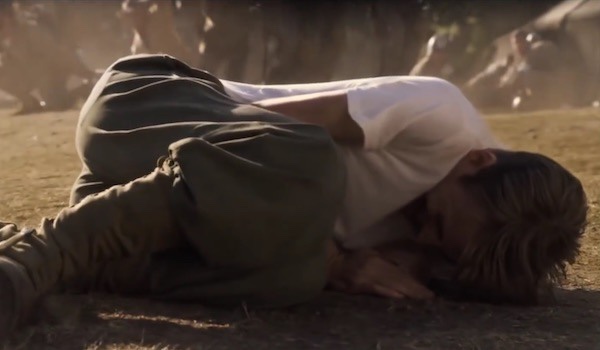
Tony Stark pictured being a selfish asshole

Similarly, Captain America, had to learn the lesson that it’s not the outside that makes you special, but the inside. When you get power, your traits are amplified, good or ill. So we need to strive to be good as people. Captain America had less of an internal character change and is more of a Paddington Bear figure in The First Avenger, acting as a symbol for people to strive towards, but again, the aesthetic choices, conflict and narrative arc are all connected to make Steve Rodgers become Captain America.

Steve Rodgers pictured learning to be Captain America

In both movies, these themes are integrated to service the movie’s central themes.

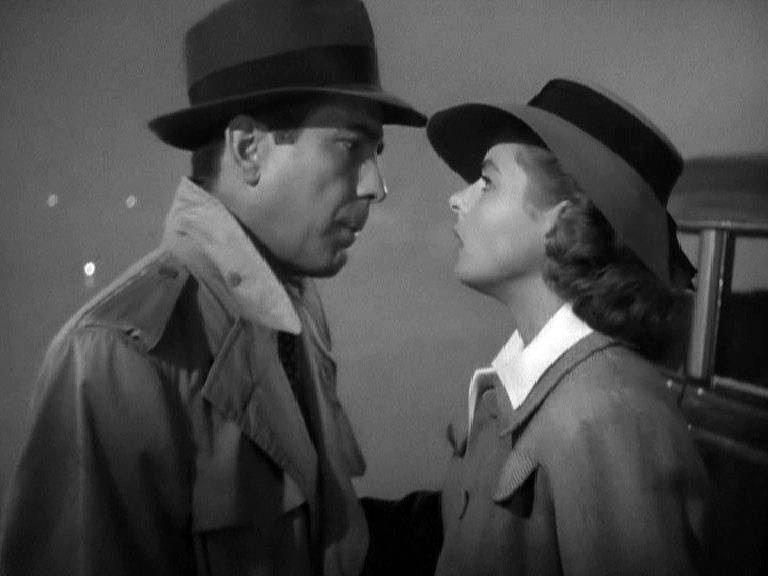
The best movies do this. Their plots are tightly woven around a central idea, and the cinematic language is used to convey these ideas visually and sonically. Casablanca for instance, has Rick learn to care for a cause above his own self interest. He lets Ilsa go with her husband Laszlo to inspire the resistance to the Nazis instead of selfishly running away with her.

Casablanca pictured being perfect

The classic screenwriting phrase to say that a film isn’t doing this is “show don’t tell.” Where you’re supposed to show the audience themes, motivations and characterization through action rather than doing so through exposition. However I think this advice is sometimes confusing, though true. The advice isn’t limited to exposition and action, but in a script’s structure, a choice in shot, and acting. Which is why I’ve learned to use the term “indication.”

In acting class, they say not to act angry or sad. That’s how you play to the surface level emotions of a scene. Instead, you’re supposed to get into the motivations of a character, their background and what led them to the moment the actor is performing. This is why method acting is so popular, you’re tapping into your actual memories of your emotions instead of trying to replicate what you think it should feel like.

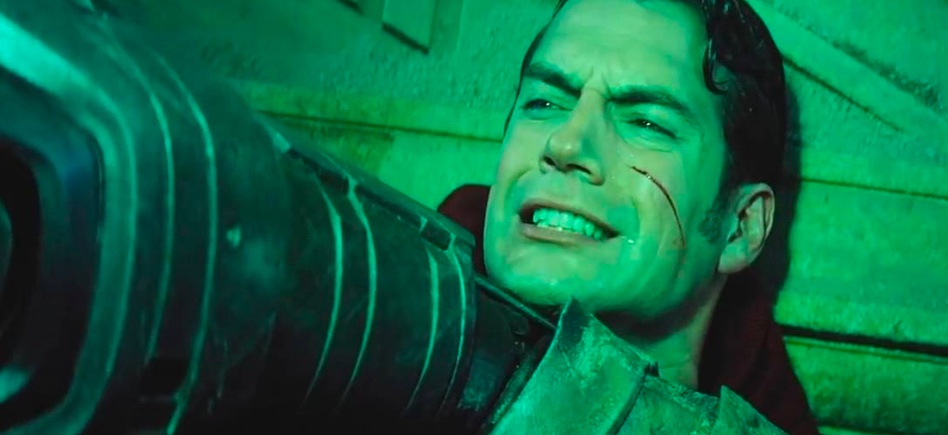
It’s hard to pin down, but we all know when a movie is indicating what you’re supposed to feel instead of getting into the meat of what they’re trying to do. In Batman V Superman, Batman and Superman are fighting. They have set up philosophical stakes about power, they are at an impasse because of a misunderstanding, and the writers have written themselves into a corner. Batman and Superman are supposed to be friends by the end of the movie, but they’re set up to be so philosophically opposed that it would take an entire new movie for them to figure it out. Which is why the writers went with “save Martha.”

Superman, pictured trying to save Martha

This wasn’t set up well in the film. It doesn’t have anything to do with the titular character’s philosophical conflict. It’s a way to indicate depth and meaning, (both these characters love their moms right?) without digging into it for the rest of the movie. It’s a shortcut.

All of this brings me back to Shang-Chi. I thought parts of this movie were great. But they’re trying to set up so much with their world and characters, while trying to make the character’s likable, that they don’t really give Shang-Chi much of an arc, let along fully integrate it with the rest of the movie’s conflict. They could’ve done that, they could have had a character arc for Shang-Chi where he thinks that standing up for family is bad, then he learns that it’s good by the end, but they don’t really do that. They have several scenes where they want you to think that’s what the movie’s about, to indicate thematic depth, but they don’t integrate it into the plots, the performances, the shot choices, or much else.

This is a natural outcome of studio filmmaking these days. The productions are complicated, so they don’t want to give new directors like Destin Daniel Cretton too much creative control. That’s too big a risk. It’s safer to let these directors who’ve done smaller projects handle some of the smaller dialogue scenes, and have ILM take over the big visual spectacle.

It’s a model that works. It’s safe, and people seem to love it. I’ve just seen the process repeat itself over and over through the years. So none of the new movies feel exciting to me after Engdame. It is what it is. Marvel isn’t for me anymore. I just hope that we see more movies that try and integrate thematic, cinematic and emotional depth into their making, instead of just indicating towards that depth and hoping we don’t notice the difference.

Simu Liu, pictured being a hunk who should star in Rom Coms

Candyman and the White Liberal Gaze

I’m a recent convert to horror. Growing up I was scared of the rumor weed, Larry Boy’s antagonist in the sequel to the fib from outer space. I would hide behind the couch despite constantly rewatching that green VHS. I avoided horror films going forward, perhaps because I have such a visceral reaction to what they’re trying to do, make your skin crawl, make you jump out of you seat.

When I started getting into film, I heard there were a few I needed to see. The Exorcist was among them. I watched it, and loved it. I told myself, “Ok, I like good horror.” Then I watched The Shining, another essential. I told myself, “Ok, I like good horror.” Then I watched John Carpenter’s The Thing. I finally admitted to my self “Oh, I like horror.”

Hence my horror journey began. In no small part due to Jordan Peele. Get Out was a cultural phenomenon that I got swept up in. It had a tight plot, sharp yet simple social commentary, and it scared the shit out of you. The movie invigorated me with the feeling that you could do anything with a movie and still be entertaining. That’s what I seek out when I watch a film. Horror is no exception.

Spoilers below.

I was excited to see Candyman on the big screen. Directed by up and coming filmmaker Nia DaCosta and written by Peele, DaCosta and, Win Rosenfeld, Candyman is a sequel to the 1992 film of the same name. It seemed to be an exciting, scary film about the Candyman myth, of which I knew nothing about. So I watched the original film for the first time, then saw an advanced screening of the 2021 film. I have a lot of complicated and conflicting feelings about the film. After reading a lot of reviews, including one from Angelica Jade and one from Robert Daniels, two black Chicago critics who were sour on the 2021 film, (they’re very good and linked below) it seems as though a lot of white liberals have uncomplicated feelings about the movie, that DaCosta’s blunt metaphors about American racial politics were enough for white viewers to sing it’s praises, without digging into how or why DaCosta is telling this message in her film.

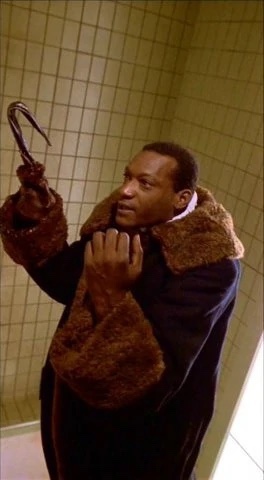
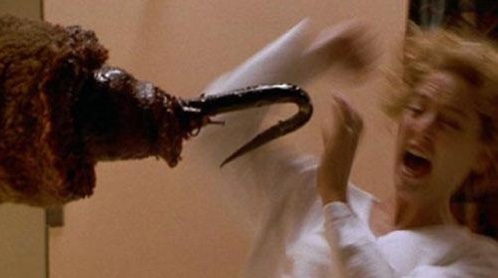
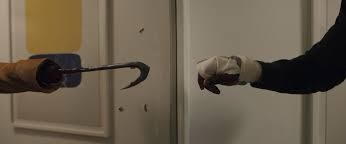
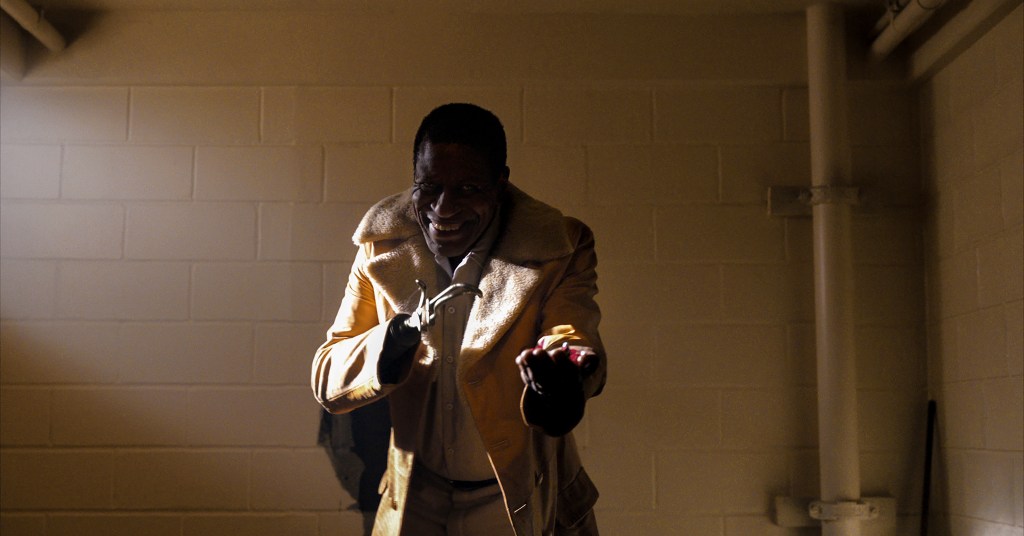
The original film follows Helen Lyle as she investigates the urban legend of Candyman for her graduate thesis. Lyle, who is white, is dismissive of the myth. Of the Candyman, a black ghoul who haunts the Chicago neighborhood of Cabrini Green. She says that the story is a coping mechanism for black communities to process the terrors of their communities. The Candyman, played by Tony Todd, was originally a painter who was lynched for falling in love with a white patron in the 1890’s. He now haunts people in Cabrini Green to keep his memory alive. So he’s not forgotten.

The film is strange and contradictory. It’s central metaphor is one that explores the enduring legacy of black trauma, and how it still haunts people. Yet the Candyman mostly haunts black people in the film, those who are victims of poverty and neglect. In the end, Helen learns to accept the monster as real, and she eventually haunts and murders those who inflicted trauma on her. The movie is more of a ghost story than a slasher film, though is borrows elements from the latter, especially its gore in later scenes, and the creeping mood that someone is following you. 1992’s Candyman is also a movie about white liberal fears, where Helen is a tourist, merely peering into the trauma of her black neighbors. He distance makes her unable to acknowledge the reality of the trauma of the black community, and her curiosity makes her summon the Candyman, to her and her neighbor’s doom. She cares, but it ultimately takes her death and sacrifice at the Candyman’s hands for her to get over her feelings that the community is something to be observed, and can’t really be helped.

2021’s Candyman is interested in saying so much more than the original intended. It follows Anthony, played by Yahya Abdul-Mateen II, an artist who lives in the gentrifying neighborhoods surrounding Cabrini Green. Anthony lives with his curator girlfriend Brianna, (played by Teyonah Parris) and it trying to maintain his reputation that he can save the black community through art.

Like Helen, Anthony appears to be a visitor to Cabrini Green. He learns of the legend of the Candyman and uses the urban myth to advance his career. Instead of using the poverty and violence of the neighborhood to gain scholarly clout, he uses it to gain artistic clout. At first he doesn’t believe the Candyman is real, but as he learns more and more about the history of the gentrifying neighborhood, he learns how he is connected to the trauma of the past. Eventually, Brianna learns that Candyman is a real manifestation of the trauma of black people in the neighborhood. Specifically of 5 victims of racial violence, including the painter from the 1890’s, a boy who was falsely accused of a crime and was executed by the criminal justice system, a man who moved into a segregated neighborhood and was lynched, a man who was robbed from and killed while buying supplies, and a man who was wrongly accused of putting razor blades in Halloween candy, and was beaten to death by the Chicago PD. Now all versions of Candyman murder people and are reborn in order to… I’m not exactly sure. Because the film makes the metaphor so complicated that it gets the message muddled.

In DaCosta’s retelling, Candyman isn’t just a haunting remembrance of black pain, but a folkloric hero that takes vengeance on the perpetrators of white supremacy. Except when it doesn’t, and when it doesn’t fully explain why the white people who are bad get killed.

I think the central problem in the movie is the strength of the metaphor. DaCosta and company put so much effort into making the myth of Candyman resonant, that they dropped the journey of the characters, and they didn’t focus on scaring the bejesus out of people.

After learning the history of Candyman, Anthony is inspired and makes art about the legend. Anthony shows his art in an art gallery. The piece is a mirror, with gory paintings of racial violence inside. A white art critic says Anthony’s metaphors are blunt and unsophisticated, and that artists are the true gentrifiers of neighborhoods like Cabrini Green. Afterwards, a white asshole art curator tries to have sex in the gallery, and his fling says “Candyman” five times in the mirror. Candyman murders them in a sleek, gory scene, and Anthony gets clout in the news the next day.

Later, the white art critic wants to speak to Anthony because his work has more “relevance” in light of the murders. He gets frustrated that the critic doesn’t understand gentrification and the black experience, and then sees visions of Candyman, (whom he summoned earlier with Brianna.) He leaves, and then the white art critic is murdered in her apartment.

Anthony later learns that he was the baby that was kidnapped by Candyman in the original movie, and that his mother tried to hide that trauma from him growing up. He is then taken by Colman Domingo’s character William Burke, who saws off Anthony’s arm and sticks a hook in it. Burke is haunted by the Candyman because his sister summoned the Candyman and was murdered by him in Cabrini Green, and since he inadvertently caused the death of the man who was falsely accused of putting razor blades into candy. Burke wants Anthony to continue the legacy of Candyman and transforms the artist into a monster.

Brianna, who at this point is the point of view character, is trying to save Anthony, but is captured by the two of them. Burke tries to get Anthony murdered by the cops to continue the legend, but in a chase through the projects, is murdered by Brianna. The cops arrive and murder Anthony and try to get Brianna to lie about what happened. Brianna summons the Candyman, who murders all the cops.

At this point in the movie, a white liberal coworker in my screening started cheering. Brianna used the myth of the Candyman, the memory of violence, to murder the cops that were about to harm her and obscure the truth of the situation and their own violence. The metaphor is powerful, but blunt, unsubtle, and kinda falls apart upon closer inspection.

In the 1992 film, Candyman murders people so people will still believe in him. He’s a haunting violence that wants to reintegrate new stories into his myth so he’ll be remembered. It’s simple.

I know what the 2021 film is trying to say. In the end it’s saying that Candyman is every black man who was murdered by white supremacy, and is enacting revenge on those who perpetuate white supremacy. By remembering and evoking Candyman, Brianna is able to escape police violence, and get justice for what the police did.

But then why was the white art curator murdered? For gentrifying the neighborhood? But it was established that Anthony is also a gentrifier, and anything the white curator did wasn’t direct violence.

Why was the white art critic murdered? For not realizing the intricacies of gentrification and the neighborhood? She understands it better than the art curator though. And she never summoned the Candyman.

There’s a scene in a high school where a bunch of white girls summon the Candyman, following the rules laid out in the original movie, they all get murdered in a tense scene. But then a black girl shows up, and it turns out the white girls have been bullying the black girl. The black girl is spared Candyman’s violence. But this is shown during the scene, rather than having a logical set up and payoff. And this isn’t even getting into the fact that Burke’s sister, (who is black) was murdered by the Candyman for simply summoning him.

It’s all muddled.

In some scenes the movie is more concerned with getting the metaphor right at the expense of scares, and in others it’s more concerned with scares than with making the metaphor consistent. It has more complicated ideas than the first movie, and at 90 minutes, it has 10 minutes less runtime than the original. The original give the viewer time to marinate in the atmosphere of everything, the performances, the setting, the narrative tension etcetera. In DaCosta’s film, I was constantly thinking “where are they going with this?” rather than “what is going to happen to these characters?”

This brings us back to the white liberal critical response. (Which isn’t exclusively white and liberal of course, but I’m critiquing my own tribe here.) The vast majority of white critics I read on this movie were just repeating the central metaphor in their reviews. They explained what the movie was saying in blunt terms without digging into the how or why of what DaCosta an company are saying.

In my experience, this is a natural white liberal response. We care about racial injustice but recognize that we’ve grown up in a segregated society, and therefore our privileges insulate us from understanding the Intricacies of racism. If we hear someone black say something about race, we jump out of our seats to agree and defend what they’re saying. The limitations of this of course, is that it can be incredibly patronizing. In the most extreme example it can devolve into the “magical mystical negro” trope of black people having supernatural wisdom to impart to us white people.

Reading those articles by Jade and Daniels, it seems as though that’s what a lot of white liberals have done. We eat up the blunt metaphors without digging into how the filmmakers did what they did, and why. Both critics said that the movie was an outsider’s view of Chicago, and merely indicated the ideas of gentrification and the slums into the film, rather than integrating them into the story. (DaCosta, Peele and Rosenfeld are all from New York.)

They also both say that the film fails to focus on scaring the audience. Jade said that “A film such as this should grab hold of your heart, make your skin prickle, cause you to sit at the edge of your seat in panicked fascination. Instead, it glides over you like water rushing over a passing pebble, leaving little mark at all, save for when the didacticism sets in again.” They say that the film isn’t made for horror fans.

They both argue that the film is so blunt and obvious that it designed as a message film for white audiences who don’t know as much about the black experience. They say that the film isn’t made for black people.

Jade goes further to argue that Hollywood has gotten black filmmakers to commodify the horror of black experience and black bodies for white audiences. And that by focusing on white audiences and our un-nuanced understanding of race relations, it reduces black people to bodies rather than to full people.

I’m not sure how much of that I agree with. But the idea makes my skin prickle.

I don’t think 2021’s Candyman is a wholly bad movie. There’s a lot to appreciate and a lot of thought put into the central metaphor. The puppetry scenes are haunting, there are some good set pieces, and good performances, especially from Colman Domingo. I think at the very least it’s interesting to check out. Despite the muddled perspective, I still think DaCosta and company have a perspective that they’re trying to get out there. That more than you can say about a lot of studio movies these days, and I think people who are trying to say something should be financially supported even if they don’t always say it in the most coherent way.

However I’m frustrated by how audiences, especially white liberal audiences are willing to buy into the metaphor without digging into it. I think Candyman indicates a lot of things, but doesn’t always integrate them into the craft of the story they’re trying to tell. I hope as white liberals, we can learn the difference and hold black artists to a more rigorous artistic standard, rather than buying into a well meaning message because it makes us feel like we’re on the right team.

I also hope that DaCosta, Peele and everyone else involved can soon make a movie that’s more focused on scaring the bejesus out of me.

Design a site like this with WordPress.com
Get started