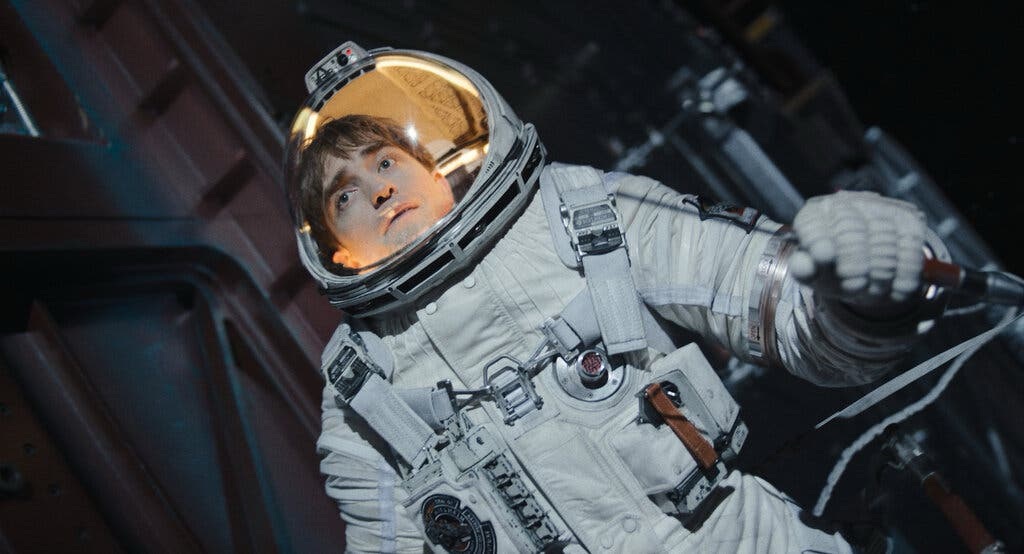
Mickey Barnes is a loser. That’s what everyone tells him. He’s recycled waste. He’s garbage. He’s a test dummy. He’s lesser. He’s unsophisticated. He’s expendable. After hearing it over and over, it’s also what he tells himself.
Director Bong Joon-Ho has always played with satire. Poking fun at how we think we’re above the systems we live in, and showing how those systems keep us in these cycles of abuse. Memories of Murder shows how the detectives are held back by their own ineptitude and the lack of systemic support for their investigation. Snowpiercer’s climax is an argument about weather our system of oppression is self sustaining, and if we’re doomed if we break the cycle. Parasite won best picture after showing how capitalism fuels the anxieties of those at the bottom and the top of its hierarchy.
Director Bong’s latest work Mickey 17 is no different from his prior works. It uses sci-fi cloning to show how workers are seen as expendable, and how capitalism keeps them in oppressive cycles that devalue their worth. “He signed up for this.” “It’s his job.”
But I think that what people have overlooked in the latest film, is not what Bong says about cycles of dictatorship, capitalism and colonialism, (those metaphors are present and obvious) but the ways in which cycles of abuse effect the people experiencing the abuse. And how those individuals get out of it.
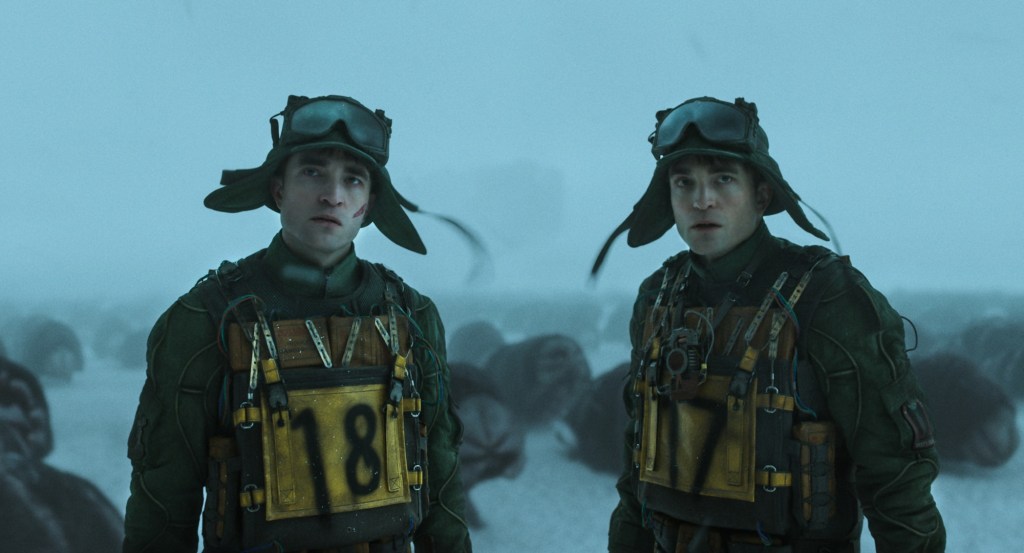
Mickey Barnes (Robert Pattinson) is down on his luck. He’s been without a family for most of his life. His mother died in a car crash he blames himself for, and he’s wandered earth looking for some comfort. His “friend” Timo (Steven Yeun) has had several schemes to get them ahead in life, until they get caught by loan sharks who demand payment with interest, or a death recorded in 32K. Mickey and Timo choose to leave for the planet Nifelheim instead. But while Timo can talk his way into a job he’s unqualified for, Mickey doesn’t think he’s worthy enough to be valued as a member of the interplanetary expedition. Instead, he gets on the ship by signing up to be expendable.
Mickey will now be the colony’s guinea pig. It’s crash test dummy. It’s proleteriat. He’s been scanned into the system, and will be cloned and reborn every time he dies. So he’ll be the test for radiation, vaccines, expeditions, you name it. He’ll do it with a faux smile on his face.
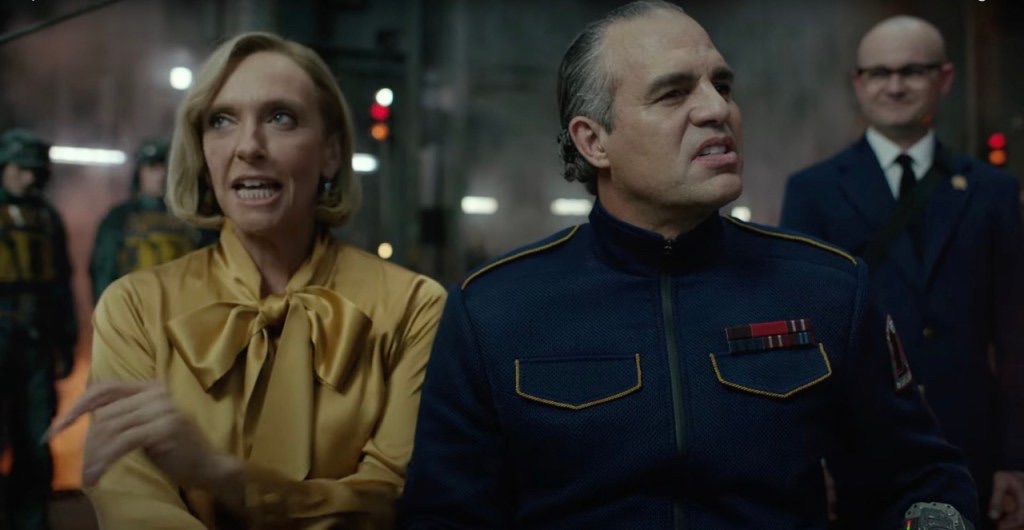
This is all in the name of spreading the human race to new frontiers. The failed politician Kennith Marshall (Mark Ruffalo) rules the colony with an iron fist. He manages labor, counts calories, dictates relationships, all in the name of the betterment of the colony. It’s all for the good of the colony. It’s for Mickey’s own good. He’s being useful.
The cycles continue as Mickey’s body count racks up. 6, 8, 11, 14, 16. Whenever he suffers, he believes it’s punishment for something he did. He believes that by suffering for others, he’s paying back his debt. Everyone treats him like shit. He’s reborn from recycled matter after all. So he learns to believe it. Why else would he be suffering so?
The only person who seems to value Mickey for Mickey, is Nasha.
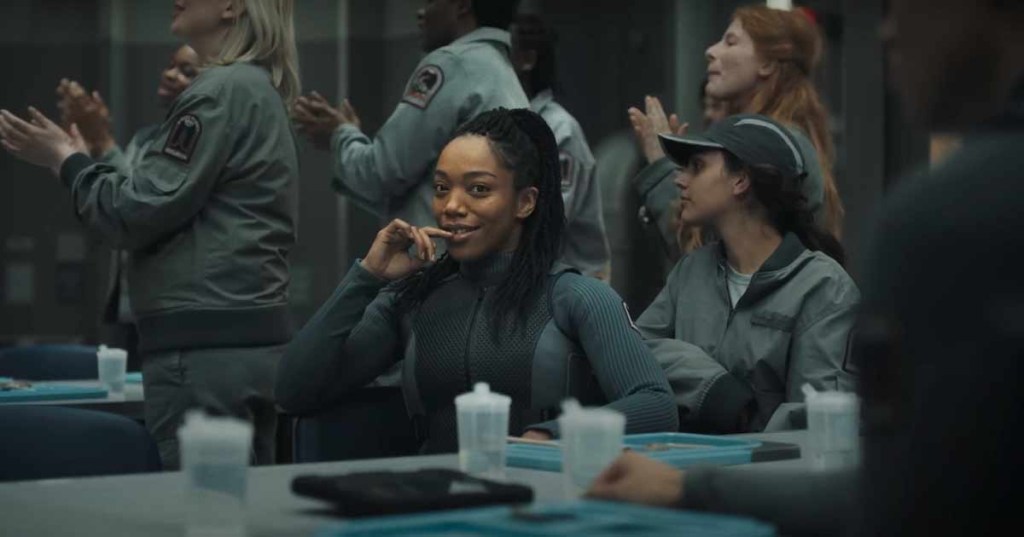
Nasha (Naomi Ackie) is a fellow passenger on the interstellar ship. From day one, they form a connection. They fall in love, and have sex despite the strict regulations that Marshall puts on such strenuous caloric activities. Despite the fact that Mickey is mistreated by everyone else on the ship, despite the fact that Mickey is literally made to suffer, she finds value in him. She comes back to the new Mickey whenever he’s reprinted. She defends him when he’s bullied. She comforts him when he suffers.
For all of the sociopolitical commentary in the film, the allusions to Scientology, Kim Jong-Un, colonialism, the red hats, Mickey doesn’t begin his journey of self discovery with some ideological awakening, but with another person finding value in him despite the lies he tells himself.
Upon landing on the planet, Mickey, on his 17th reprinting starts dying in quick succession. He gets blamed for the death of a fellow colonist when she tries to kill one of the native “creepers” and is sent out into the cold with less rations until he can bring back a creeper as punishment.
He finds one, and despite his pleas that he’s “good meat” the creepers don’t want to eat him. We later learn that they found value in him and decided to save him. He’s copied and the plot goes into full gear when he returns to the ship to discover that a new Mickey 18 has been living on the ship for several hours. Mickey 18 has been reprinted incorrectly, and acts in a psychotic way, but in a way where he stands up for himself. Unlike all the Mickeys before him, Mickey 18 is mad. Mad at Timo, mad at Marshall, mad at everyone who treated him like trash. Who treated him as disposable. But he’s mad at Mickey 17 most of all. Who thanks Marshall and everyone else for the abuse he suffers.
Mickey 18 is the one version of Mickey that doesn’t blame himself. He’s the one version that sees through everyone else’s bullshit. He’s the one version that will call out Mickey 17’s bullshit.
Once Mickey can see that other’s see his worthiness, despite his own self deprecating thoughts, he can learn to see how his suffering isn’t his fault. He can lean that he’s lovable, that his perspective and empathy is valuable to others. That he doesn’t need to be disposed of to be valuable to the colony.
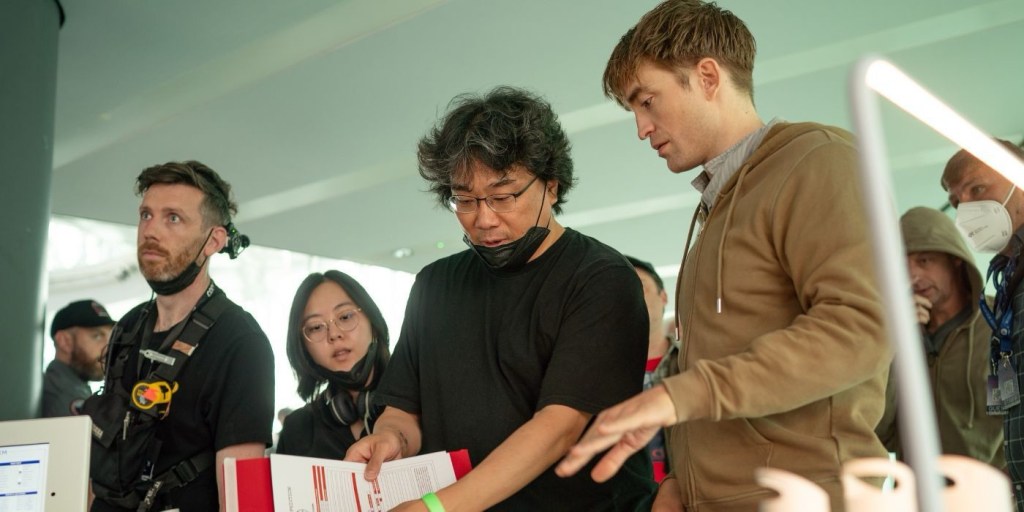
Human society can’t be solved. It can be improved, but despite the grand theories and ambitions, we’ve failed to make the systems that run our lives work for everyone. We scapegoat, we exploit, we are blind to our own faults. Mickey 17 has all of the societal critiques in all of Bong Joon-Ho’s films, but what’s interesting about it, is that the arc of the film is more about Mickey than about the society he’s a part of.
We have a lot of problems to solve as a society. We need to learn how to recreate our systems to value each other instead of treating each other as expendable. But in order to move forward, we need to learn how to love each other. To break the cycles of abuse in our personal lives, and stop telling ourselves lies that others tell us to keep us down.
Mickey 17 is a film full to the brim with ideas. But it’s glue, the arc that keeps the film together in one big, beautiful narrative arc, is that of Mickey Barnes, learning that he can eventually stand up for himself and break the cycle of abuse. Learning from friends and lovers, that he has worth. Learning that his suffering isn’t his fault, and that he can love and be happy. And that’s ok.
 TheFlickReview