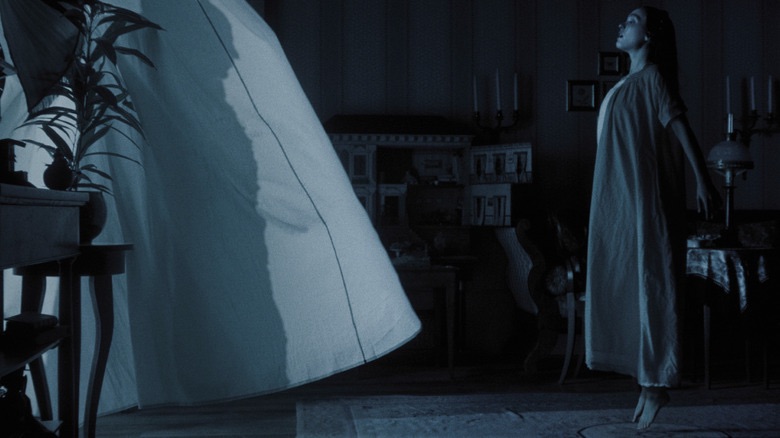
What is evil? Is it the mere act that is taken by a man? Is it man’s intention? Is nature, in its violence and indifference to suffering, evil? Is evil a compulsion that the strong can resist, and the weak indulge in?
In Robert Eggar’s reinterpretation of the 1922 film by F.W. Murnau, he doesn’t provide an easy answer. But he probes the question in his 2024 film Nosferatu. It is not only a question asked by the structure of the film, but directly by the protagonist. “What is evil? Does it come from outside? Or from within us?”
Modern society is obsessed with finding clear answers. We want a formulaic response to the evil we see in the world around us. The evil in the world comes at us every day, but we don’t have an easy way to respond to it. Amongst a firehouse of shit, we struggle to see the light, or else we give up and decide to embrace it. Eggars movie, consciously or not, digs into these questions while providing audiences all the traditions of horror that the original Nosferatu: A Symphony of Horror invented.
The film follows Ellen and Thomas Hutter. A married couple who are attempting to live a pious, modern life in 19th century Germany. Ellen has found freedom in her marriage. A spiritual bliss that keeps the darkness away. Thomas has a job at a real estate firm, a career that is quintessentially of the modern age of capital, speculation and progress.
But Thomas must go east to pursue his career. He must sign a deal with a mysterious Count Orlok to buy a home in the thriving German port city. Thomas encounters strange Gypsy’s in the east, whose traditions of communal living, virgin sacrifice, and impaling of corpses unsettle his modern morals as well as his Christian upbringing. Bodies should not be desecrated, and this crude ritual is backwards.
Upon arriving at Count Orlok’s castle, Thomas learns that Orlok wants to move to modern society where these rituals are not practiced. Modern society has solutions. Hysteria is countered with absynth, rapists are reconditioned in hospitals, the plague is caused by rats. Modernism is a proposition that problems can be solved with science, and a moral rationality that moves ever forward.
Count Orlok wants to be a part of this society.
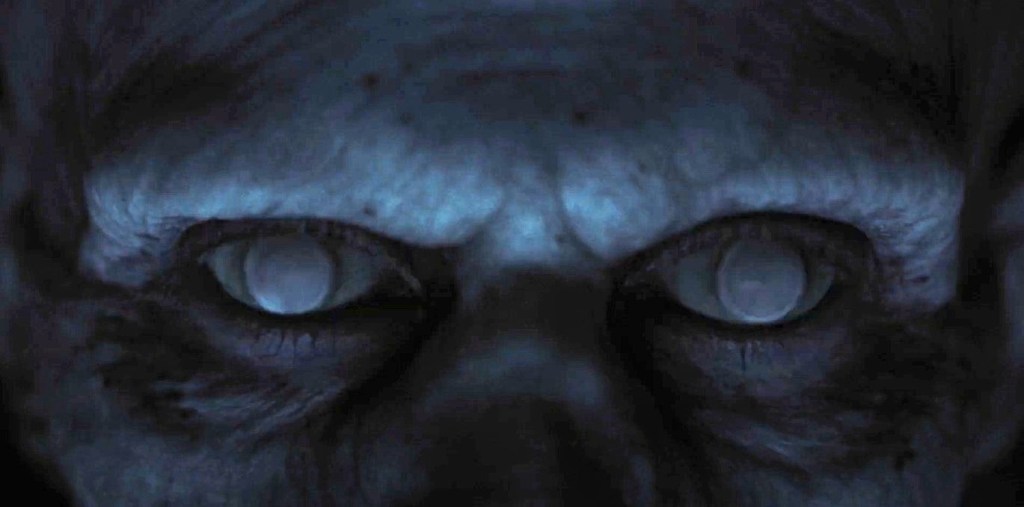
Ellen had something missing in her life since she was a child. A sense of pleasure, a sense of freedom, something. Because of this lacking she invited Nosferatu into her life. He was attached to her. He was a relief from her depression, her melancholy. She felt shame that she let this evil into her life, but it was to fill something that was lacking, and it became a part of her.
Eggars makes this connection not only in the story, but in the visuals of the film. He has Orlok’s shadow meet Ellen. His hand reaches across time, haunting her, controlling her. He match cuts between Orlok hunting Thomas, and Ellen moving like a ghost in her home. He gives Ellen some of the few jump scares that aren’t Orlok’s. They’re connected in the very grammar of the film.
When Orlok come from his castle to Germany, Ellen enters fits of possession. Her friends the Hardings, try and help her by getting her to repress her episodes. They tie her down, they lock her in her room, they compel her to behave normally. These fits can be explained. They can be made sense of. They can be solved. Yet when she tries to explain her distress and her connection to Orlok they dismiss her. When death visits their home it is not a monster that kills, but a rat. The Hardings are modern people who reject the ramblings of hysterical women and gypsies.
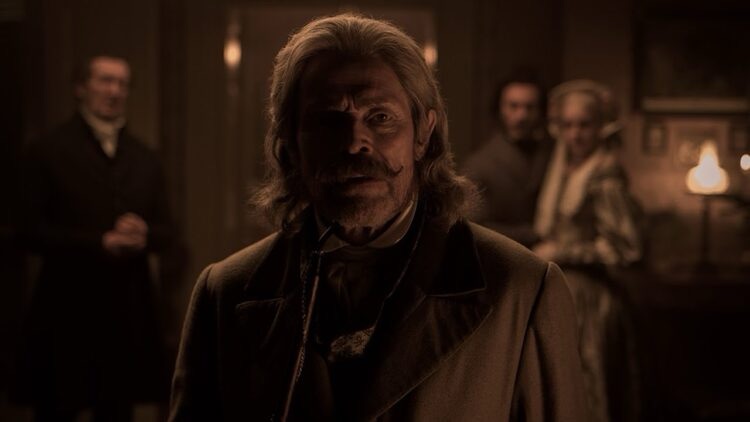
Desperate, the group turns to Willam Dafoe’s character, Professor Franz. He still studies the nature of evil. Why people drive steaks through corpses. Why creatures haunt the night and fear the light. He declares that evil is not some equation that can be solved, it is the devil. A night demon. It, like death, like a plague, only wants to consume until the entire earth is eaten up. It is not logical. It is not explained. It cannot be ignored or repressed. Yet it must be confronted.
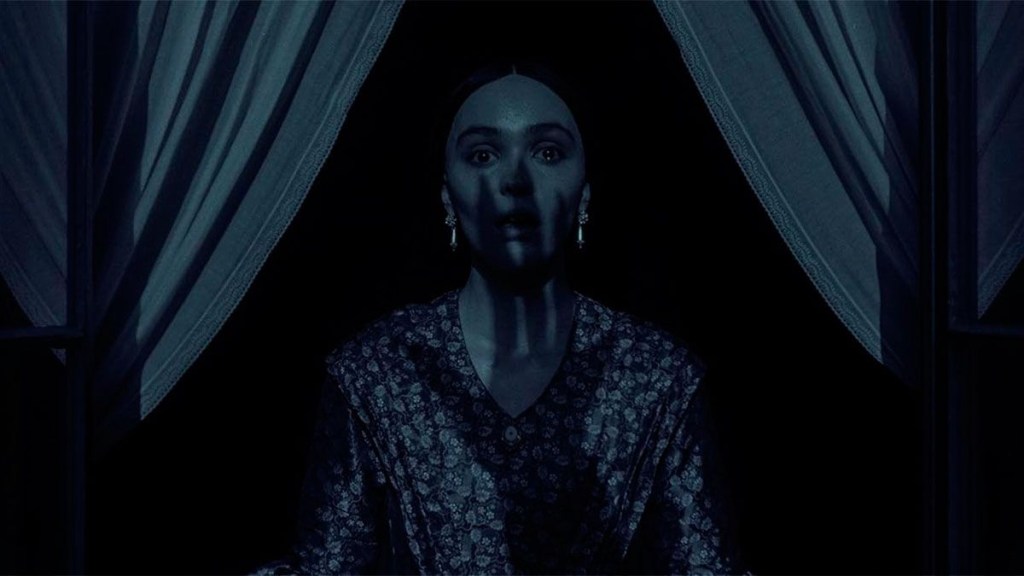
When Ellen begs the Hardings to see her pain, when she tries to explain to her husband Thomas why she turned to Orlok in her moment of weakness, she brings up her melancholy. She tries to use it as an explanation. She tries to convince her lover and friends that she isn’t a bad person. She tries to deny that the evil she is connected to is not a part of her. That if she can understand why she turned to Orlok she can easily turn away.
The thing about depression is that it is a disease that is a symptom, rather than a root cause. There are aspects where one gets into looping cycles of learned hopelessness, but depression is your psyche telling you that there is something wrong with yourself and your life. It is compelling you to treat others poorly. It is compelling you to treat yourself poorly as a manner of self defense. Without fixing the underlying circumstances that lead to depression, you are bound to repeat the cycle, and circle back to the sin of despair.
In order to defeat evil, we must confront it. It must be brought into the light.
Orlok wants to settle into modern society because that’s where he can thrive. When people throw out the wisdom of the ancients they do so because they think their ancestors are backwards. In some ways they are. The gypsy’s in nosferatu could never defeat the vampires. They staked them to the ground instead of bringing them into the light. But the modernism that surrounded Braum Stoker’s Dracula led to the evils of England’s slums imperialism and factories. The modernism that surrounded Murnau’s Nosferatu led to the evils of the Nazi party, and the socialist empire of the Soviet Union.
People in the 19th and 20th centuries thought they could solve the evils of disease, of capitalism, of empires and depression. But by trying to repress these compulsions, by trying to ignore the wisdom of the ancients, by trying to solve the problem of evil, those societies merely invited them in.
I think it’s fitting that in the 21st century; when we are so isolated from tradition and community, when nations are at war, when depression plagues us and industrialists think they can solve the evils of the world with more technology and more capital, Robert Eggars turned to the traditions of literature and silent cinema to tap into what evil really is.
 TheFlickReview